Category: Articles

Faeroe Isles: ‘Silence. Isolation. It’s breathtaking’
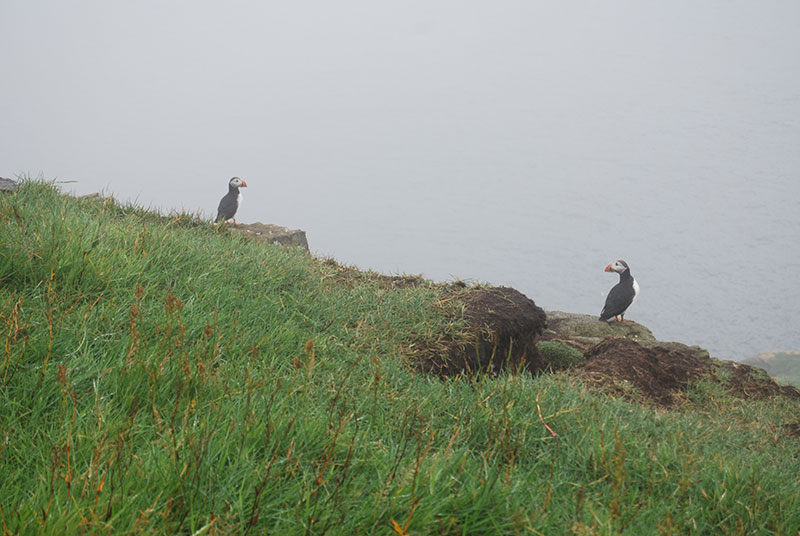
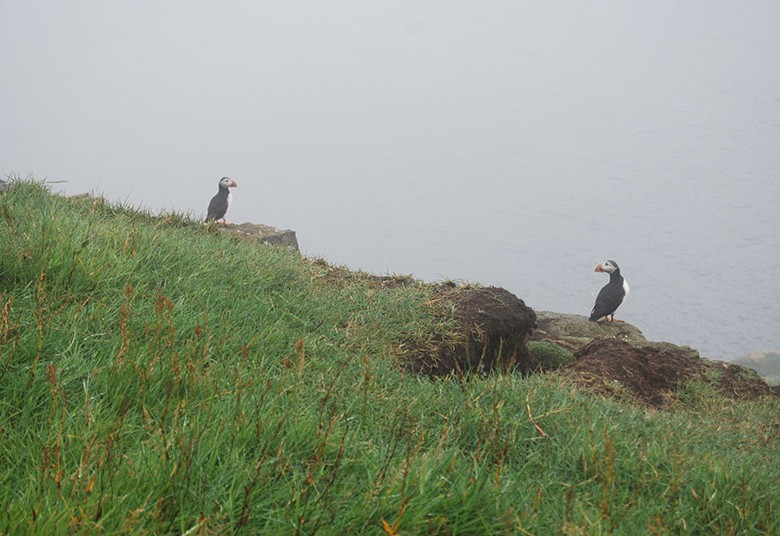
Puffins on Mykines

Puffins on Mykines (more pictures at the end of the article)

It’s pouring down, absolutely streaming. Wind lashes across the cliffs above the treacherous Atlantic Ocean. And I’m on my summer holiday. But I’m loving it because all around us, wings flapping madly a few feet above our heads, there they are: squadrons of shiny black puffins.

We are in the centre of a puffin colony on the edge of the island of Mykines (pronounced Mitchiness) in the Faeroe Isles, reached by a 45-minute ferry that departs twice a day from Vagar, another island. There are 18 main islands in the Faeroes, which are a semi-autonomous part of Denmark and lie 160 miles north of the Outer Hebrides, the closest landmass, and halfway between Shetland and Iceland.

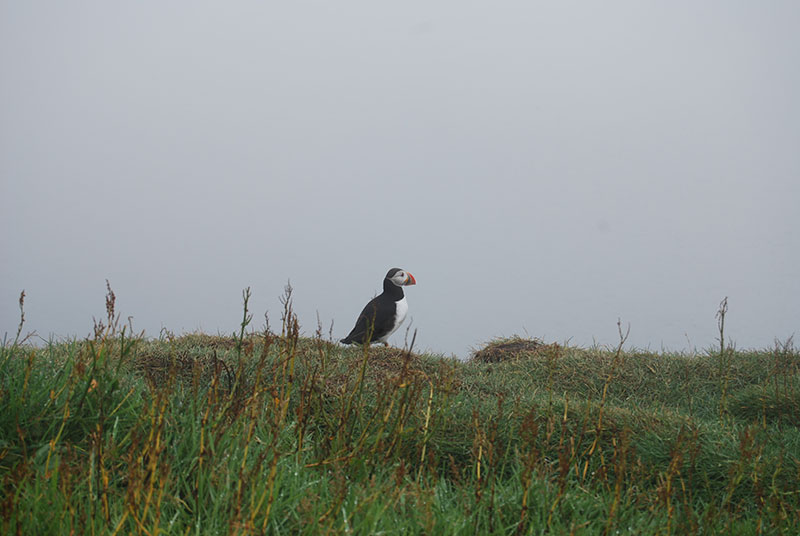
It is a magical spot. The puffins sit with their quizzical cartoon-like faces next to holes in the emerald slope (the grass is particularly green as the puffins fertilise the land). They don’t mind human beings at all: often we walk within a few feet of the birds. From time to time they plunge off the hillside, flapping furiously as though their wings are not big enough to maintain their body weight.

This has a strange effect: they look almost like mechanical wind-up toys as they fly. Then they flutter back, missions accomplished with beaks full of tiny fish to feed their young, hidden away in nests in the holes. On their return journeys they must avoid the attentions of huge speckled-brown great skuas: piratical gulls that feed by bullying the puffins into dropping their fish and soar above us as though they own the sky.

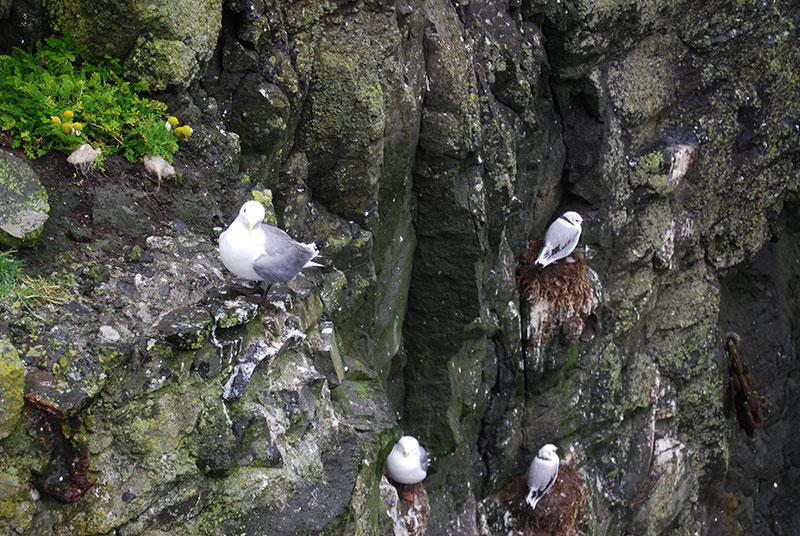
Near by, between the puffin nests, Arctic terns are also looking after their young. These wispy grey-white birds with twin tails swoop up and down looking as though they are dancing: they are known to attack tourists who venture too close. Beyond, there are vast cliffs (the Faeroes has some of the highest sea cliffs in the world) dropping more than 300m into the sea and stained white with droppings from the hundreds of gannets and kittiwakes that have nested on ledges. Gulls, gannets, kittiwakes, Arctic terns, shags and puffins fill the sky like confetti.

The puffins, though, are the undoubted stars of the Faeroe Isles, which can be reached in just under two hours from Stansted. The airport you fly into has a short sloping runway, too short for the likes of Ryanair and easyJet. This means that the only way to reach the islands from the UK is on Atlantic Airways’ twice-weekly flights.

The result is one of the quietest places in Europe (population 48,000), almost secretive in its isolation and general lack of fanfare, although the tour operator Sunvil Holidays has just begun offering short breaks in the hope of bringing the islands to the long-weekend-break brigade. “Most British people don’t know we exist, but we are trying to change this,” says Solfrid i Kroki, who works for the Faeroe Isles tourist board. “The few who have heard of us tend to only know about the football team [which is famous for its heavy defeats].”

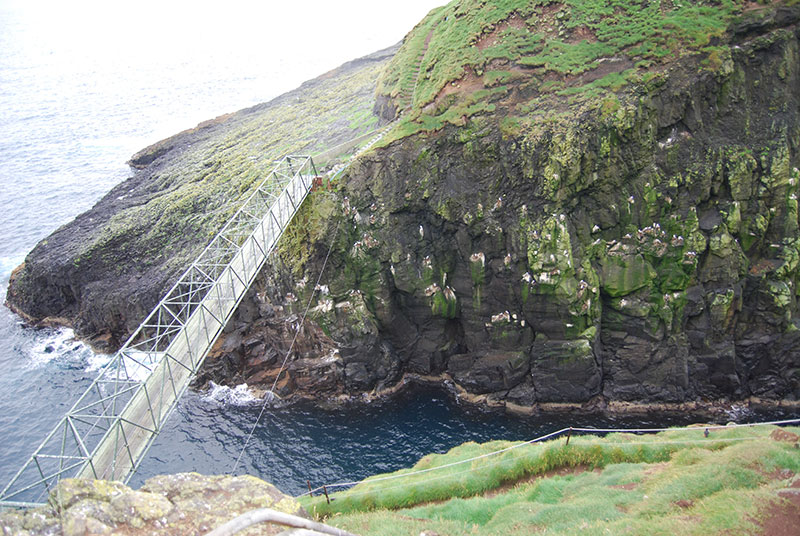
Kroki tells me this as we walk down the puffin slope on Mykines to a bridge hanging across a gorge. The scenery just about everywhere in the Faeroes is dramatic — the landscape consists of mountains, glacial valleys and huge cliffs with giant waterfalls.

But here, on the western tip of Mykines, it is particularly breathtaking. We pass along a narrow ridge that is shrouded in cloud and feels like the edge of the world, and go carefully down a winding path with a handrail (vertigo sufferers sometimes turn back at this point, although it is completely safe). Fields full of bedraggled black and white sheep lead to an automated lighthouse by an enormous cliff. This overlooks two vast sea stacks that are covered in gannets. It is a spectacular sight.

We have been led here by Karsten Larsen, a guide who is one of 12 people who live on the island – it is too dangerous to attempt on your own, especially when it is rainy. He tells us how locals go bird hunting by climbing to the top of the stacks and abseiling down with clubs to strike youngsters, which are collected in boats below.

Gannet is considered a delicacy among the Faeroese, as is puffin, although hunting is limited under the law and care is taken not to wipe out populations. It is an incredibly risky pursuit that has claimed many lives: there’s a memorial to bird hunters who have died over the years near the tiny village where the ferry arrives. Gannet, Larsen says, is “very tasty, but expensive; it is surrounded in 2-3cm of fat — some people boil it but it is better fried”.

Larsen is a fount of knowledge on Mykines, explaining that the island is particularly good for rearing sheep because of the clumps of puffin-fertilised grass. During the Second World War, we learn, the British had a base in the Faeroes, with an outpost at the lighthouse (Britain occupied the islands when Denmark fell to Germany and the territory suddenly took on strategic importance in the North Atlantic). He stops near the lighthouse and points towards the south. “That way is Antarctica. There is nothing in between!” he says with a sudden flourish.

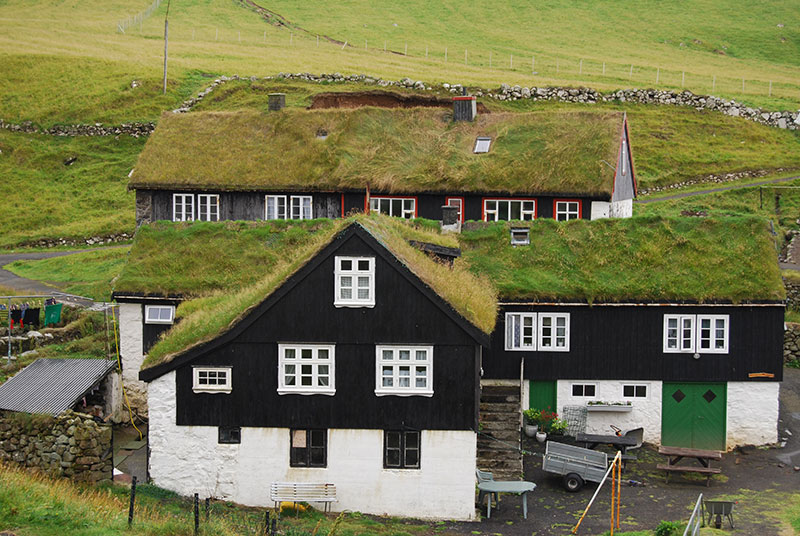
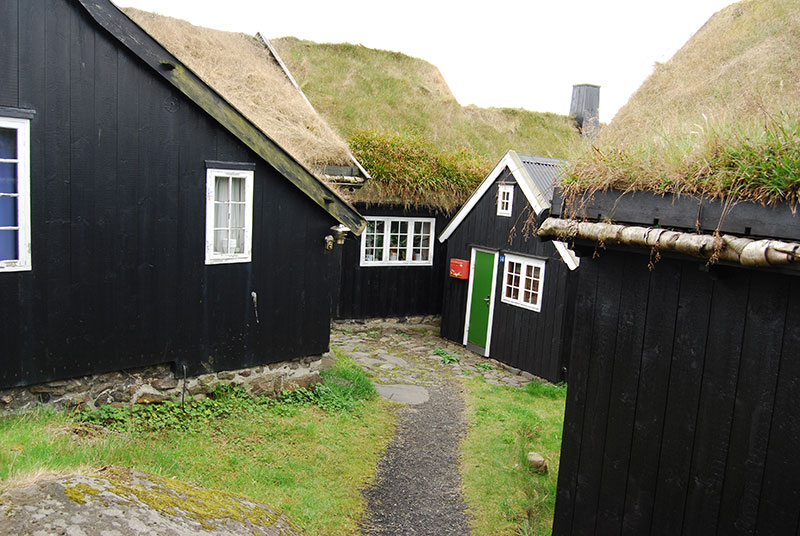
The summer, when it is light past midnight and the birds are about, is the time to go to the Faeroes — which could have been part of Britain had Henry VIII accepted an offer from a cash-strapped Danish king. The largest concentration of the population, about 19,000 people, lives in the capital, Torshavn. This has a harbour full of wooden fishing boats (fishing is the big local industry) and an old town section dating mainly from the 19th century and consisting of a series of lovely wooden houses painted in rusty reds, yellows and greens — each with grass roofs.

These apparently help with insulation and also keep out the pitter patter of rain: a serious consideration in a place where it buckets down so much, although the weather can be bright and warm, too, in the summer. The seat of government looks like a schoolhouse and is opposite the tourist office. Inside the latter you can buy all sorts of things decorated in puffins (key rings, mugs, tea towels) and it is, remarkably, the only souvenir shop in the capital: it’s still very early days for tourism in the Faeroes.

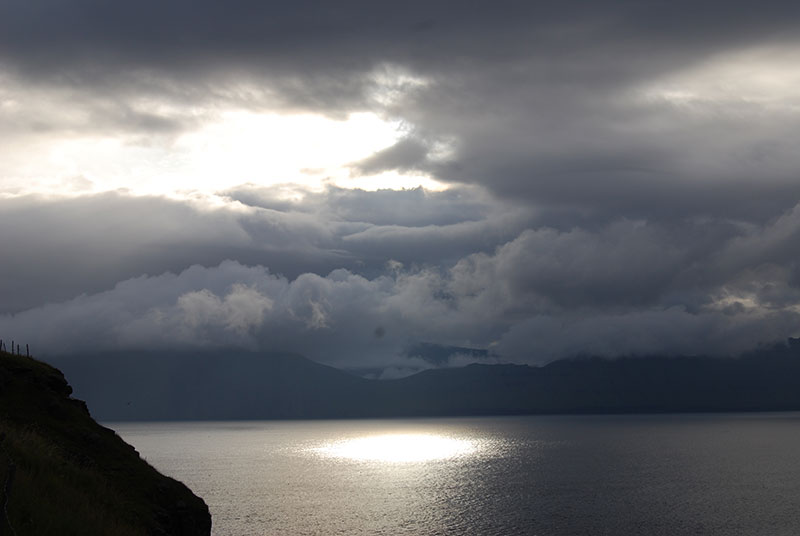
Torshavn has a handful of cosy bars and restaurants and a fine art gallery, but in Gjogv, where I stay at a B&B with a grass roof, there is only a single caf?. The feeling of isolation is terrific. I go for peaceful walks along the sea cliffs (one of which is named Satan) and marvel at the sheer scale of the scenery: the vast plummeting rock faces, the huge glacial valleys. Gulls sail above and the sun breaks through the clouds above Kalsoy island. The Faeroes may be best known for being mentioned in the BBC Shipping Forecast — and they certainly get a lot of weather — but they make a great place to escape the rest of Europe … and the tourist crowds.

Need to know

Getting there Sunvil Discovery (020-8758 4722, sunvil.co.uk) offers a four-night stay in the Faeroes from £966pp. The price includes direct return flights from London Stansted to Vagar, two nights’ B&B at the Gjaargardur Guesthouse in Gjogv, two nights’ B&B at the three-star Hotel Torshavn, and car hire.

Further information Faroeislands.com. Also read Faroe Islands by James Proctor (Bradt, £15.99).

Local currency The Faeroese krona is tied to the Danish krone. The islands can be expensive: a small glass of wine at a bar costs about £5 and a sandwich about £6.

Must do Visit the Faeroe Islands Art Museum in Torshavn and the Nordic House theatre (www.nlh.fo).

When to go May to September for the best weather and for seeing the most birdlife.

First published in The Times, March 27 2010
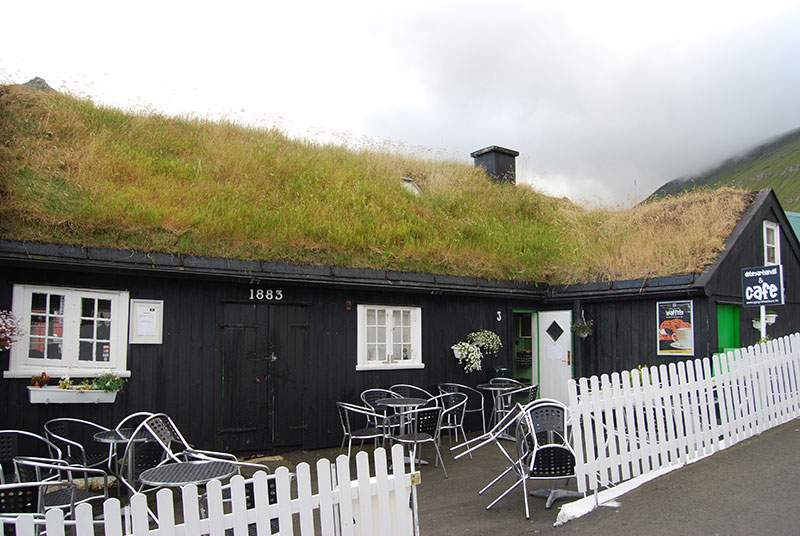
Cafe in Gjogv
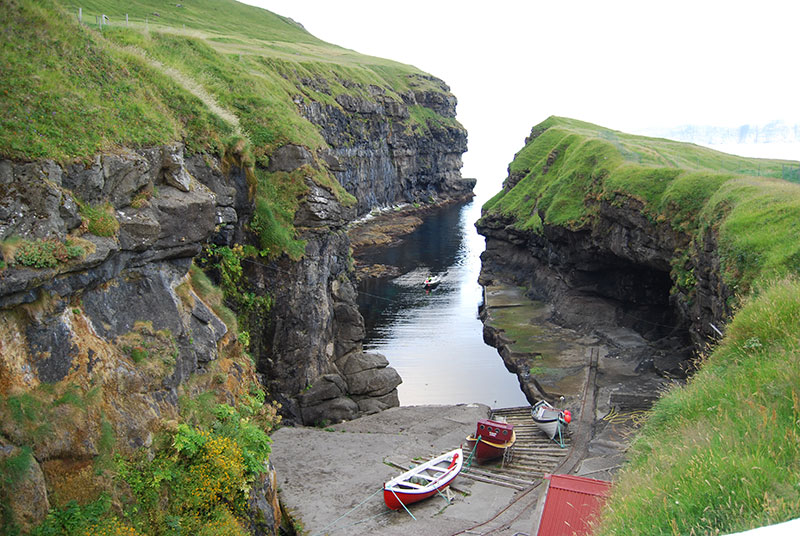
Cafe in Gjogv

Walk along the coast from Gjogv
Walk along the coast from Gjogv

Typical grass-roofed houses
Typical grass-roofed houses

Puffin on Mykines
Puffin on Mykines

Bridge on Mykines
Bridge on Mykines

Gulls on Mykines
Gulls on Mykines

View from Mykines
View from Mykines

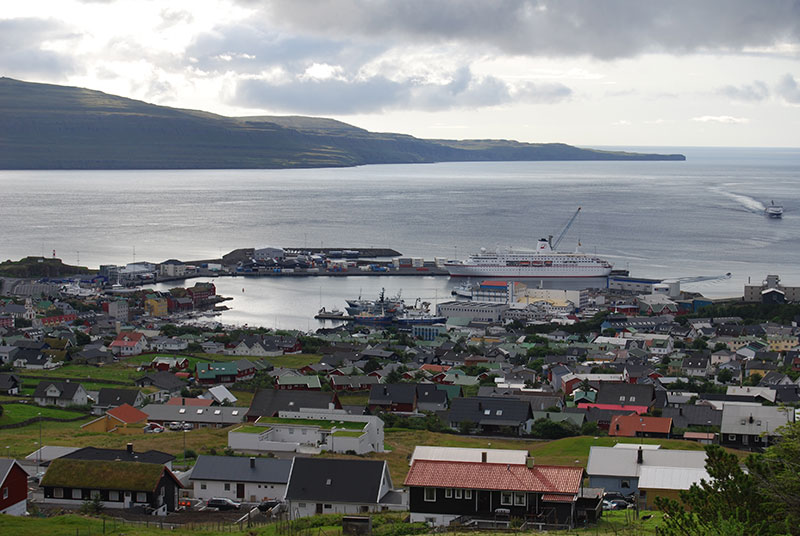
Torshavn Houses

Torshavn

Torshavn
Torshavn
On the long road, from Denver to San Francisco

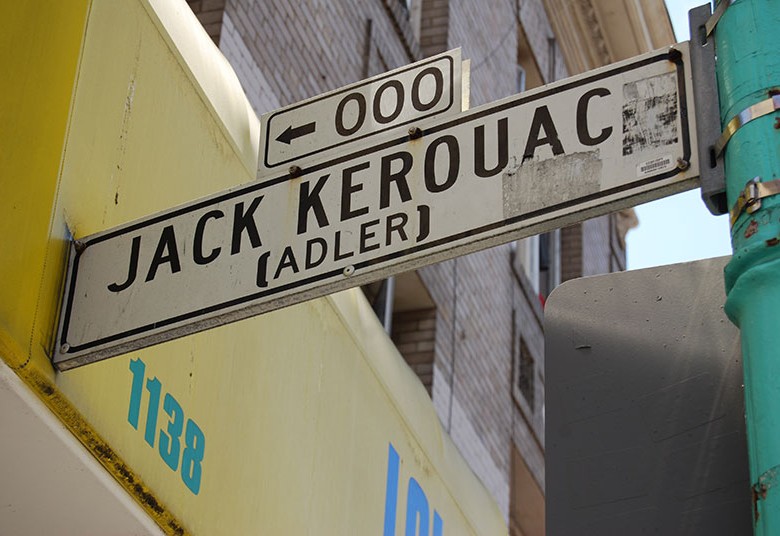
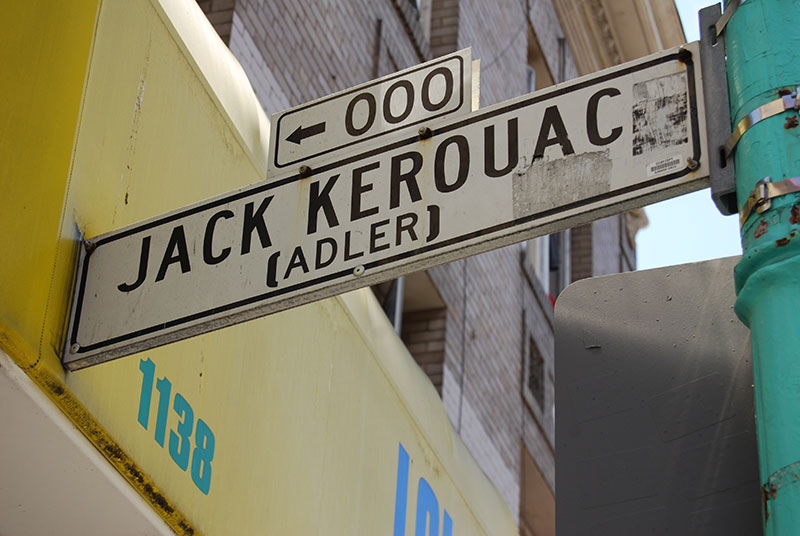
Jack Kerouac Alley

Lights flashed. The cop car made a u-turn. I looked in the mirror as the siren sounded, then checked our speed: too fast. One day into our trip across the United States driving from Denver to San Francisco, following the highways taken in Jack Kerouac’s novel On the Road, and we were already in trouble with the law (just like the characters in the book).

“Do ya’ll realise what it’da be like to hit an elk in this thing?” drawled the steely-eyed officer, eyeing our Toyota sceptically, as he strolled — slowly — to the driver’s window. “I’m sorry I didn’t realise we’d picked up speed. It was just because we were going down hill,” I replied. I really hadn’t: the speed limit was 40mph, and seemed so slow for such a good road.

“Do you realise what would happen if you hit an elk?” the officer continued, raising his voice and looking very angry, all of a sudden. I replied that it would probably be an extremely dangerous collision, and apologised profusely. He eyed me, looking steely again, his face bright red. Then he walked away and, remarkably, gave us a “courtesy warning” and let us off a $250 fine. For the rest of our 2,000 mile trip, we stuck religiously to the limit.

It was quite an adventure. My girlfriend and I had begun in Denver the day before, where we had flown into the “Mile High City” and picked up our car from the airport. We were heading for the Pacific Ocean, taking in five states along the way: Colorado, Wyoming, Utah, Nevada and California on a two-week trip we would never forget.

In Denver, we had checked out the laid-back shops and the cool downtown bars — some of which still had a Beat Generation vibe. We had also seen the strikingly bright Native American art at the brilliant Denver Art Museum, one of the best collections in America. Then we’d driven via the even more relaxed city of Boulder — where we picked up an ice-box from a mall (essential for keeping things cool on a long drive) — and headed along dramatically twisty roads into the Rockies to stay at the old gold mining town of Central City.

A night in a casino hotel amid the old clapboard houses — spinning a few slot machines and being surprised to end $10 up — was followed by our brush with the law. And then we were on, northwards, along the I25 in the direction of Wyoming.

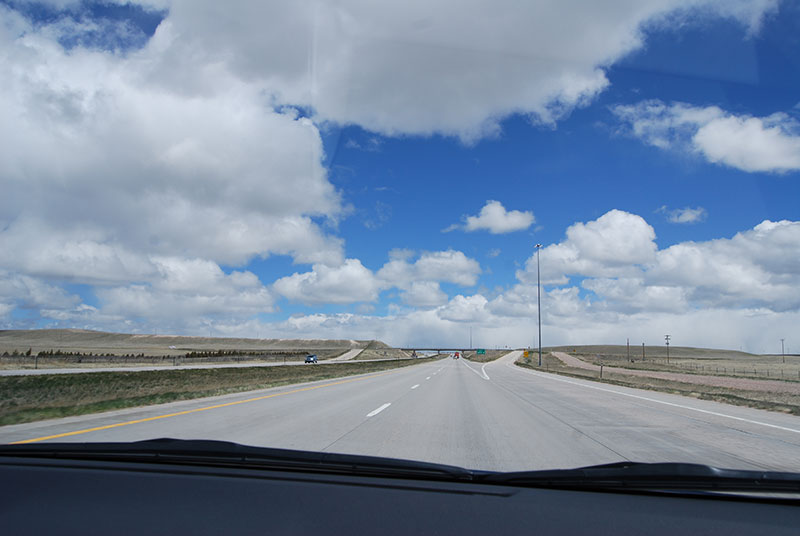
It was a long straight road. I stuck on the cruise control and we watched the scenery change from jagged elk-filled mountains, to a mall-land of Walmarts, to an emerald expanse of fields, to a series of bright fireworks outlets, which seemed to mark the boundary into Wyoming. They did. And soon we were moving along the I80, which led us the rest of the way to San Francisco, the Beat poets’ favourite hangout.

Wyoming was like nowhere we had ever been. The state is enormous: 97,800 square miles, compared to Britain’s 88,700, but with a population of about half a million. The prairies spread out seemingly forever, rolling in honeysuckle glory, with snow-capped mountains on the horizon. Hail beat down making the road almost invisible. Great trucks roared by. The hail disappeared, almost as quickly as it came. And then performed the same trick a few more times.

We crossed the Continental Divide — the hydrological dividing point of America between the Pacific and Atlantic oceans — and stopped in the tiny town of Arlington, where a teenager was shooting gophers with a rifle in a field. The sound of bullets whistled across empty land.

The cops seemed to take interest in outsiders (us) as we drove into Saratoga: we were followed into town by a cruiser, which turned away after a while, as we were 5mph under the limit and nervously creeping along. Saratoga was a small farmers’ town with a couple of rows of shops selling cowboy boots for cowboys, not tourists. Pick-up trucks were the vehicles of choice. The grocery shop had enormous deer and buffalo heads mounted on the walls.

We checked into Saratoga Resort, a motel with natural hot springs in a courtyard at the back. Each hot-tub had a slightly different temperature: from hot to very hot to absolutely baking hot. The smell of sulphur rose into the sky, as stars appeared above. We crunched our way back to our warm, shoebox room across remnants of snow. We were travelling in late April and it was still freezing.

The next day the miles clicked by, along Rattlesnake Road, and back on to the I80. On and on we went through cowboy country to the Utah border. The most we drove in any day was about 400 miles; about six or seven hours, quite manageable. The scenery changed at the border, becoming hillier, with the highway heading down through wide gorges until we saw the pancake-like spread of Salt Lake City.

This has to be America’s cleanest city. We stayed at a downtown hotel within strolling distance of the temple to the Latter Day Saints. Along pavements that might have been scrubbed with a toothbrush they were so spotless, we visited the grand temple, where friendly Mormons greeted us on paths amid brightly blooming flowerbeds. “All is well with the world and God is smiling on you,” said one sister, with a beatific smile.

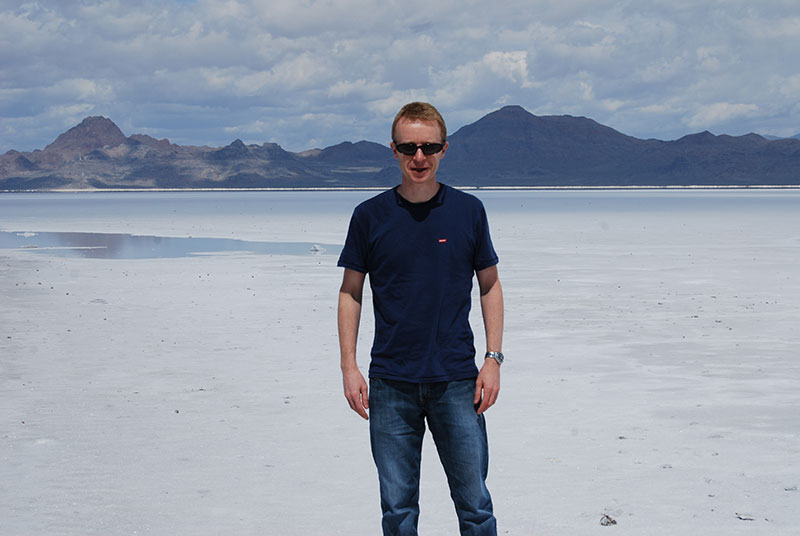
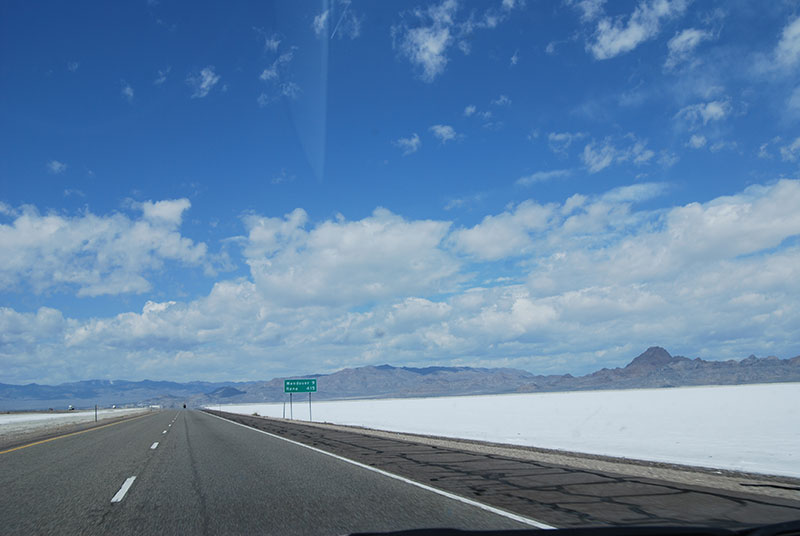
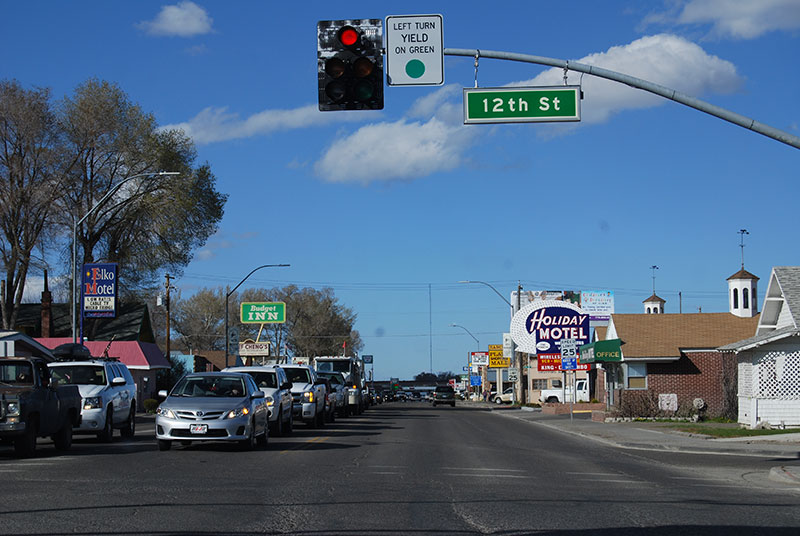
More miles and more highway led to the mesmerisingly bright Salt Lake Flats — progressing through the haze as though we were driving across the moon. Past $10 lapdance joints and towns with penitentiaries, where signs warned us not to pick up hitchhikers in case they were escaped convicts, we reached the little-visited Elko. This was a truckstop of a place with a run of fast-food joints and casinos, one of which we were staying at. We drank Buds at the bar amid truckers and cowboys wearing caps saying “Support gun rights: without them you don’t have any”. The machines pinged and played tinny electronic tunes. We won another $10 on the slots.

A pitstop in Reno (effectively a smaller version of Las Vegas) was followed by two nights on the southern, Californian tip of Lake Reno. What a glorious place: the Alpine water so placid and smooth, like bathwater but stretching forever, with snow-capped peaks all about. This was the perfect hideaway for a breather on a long road trip. We took a boat trip on the MS Dixie, and went for walks by the shore.

The drive into San Francisco was not the longest one on the trip. We dropped downwards from the mountains and soon found ourselves on the busiest highways yet. Drivers went faster. They jumped lanes erratically. The signs were confusing. But we made it across the long-sweeping Bay Bridge in one piece and arrived in Frisco.

We had arrived. After a struggle with a one-way system from hell, and a close call with a tram, we found our hotel near North Beach, one of Kerouac’s beloved old haunts. Then we took one last drive, to the edge of the Pacific Ocean. From Lincoln Park, with the wind sweeping across the choppy waves, we stood and looked out towards the delicate red outline of Golden Gate Bridge. What a drive — 2,000 miles on the road, with a lot of weaving, and only a little trouble with cops along the way.

Need to know

Getting there: Bon Voyage (0800 3160194, bon-voyage.co.uk) has a 14-night fly-drive with two nights at Hotel Monaco, in Denver, two nights at Century Casino in Central City, one night at Saratoga Resort, two nights at Salt Lake City’s Hotel Monaco, one night at Red Lion Hotel in Elko, one night at Silver Legacy in Reno, two nights at Aston Lakeland in Lake Tahoe, and three nights at San Francisco’s Diva Hotel from £1,995pp (£2,145pp in a convertible). United Airlines (0845 8444777, unitedairlines.co.uk) has flights to Denver and from San Francisco from £639.

Getting about: Rhino car hire (rhinocarhire.com) has 13 days’ car hire from £524; Denver pick-up and San Francisco drop-off.

Further reading: On the Road by Jack Kerouac (Penguin Classics, £8.99)

Chasing the American dream

In On the Road, Jack Kerouac’s 1957 novel about the madcap exploits of hipsters chasing their dreams across America’s highways, Sal Paradise — the main character — has a thing about Denver.

“Denver, Denver, how would I ever get to Denver?” he wails as he waits for a ride in the Great Plains. Eventually, after squeezing into pick-ups with hobos, he lucks out with a journey in a brand-new car, zooming onwards with “the wickedest grin of joy in the world”, looking forward to the city’s Beat Generation jazz clubs.

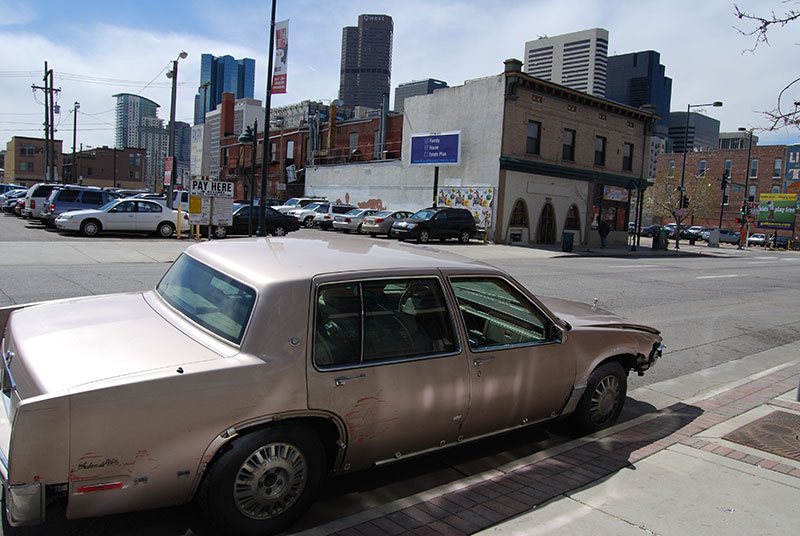
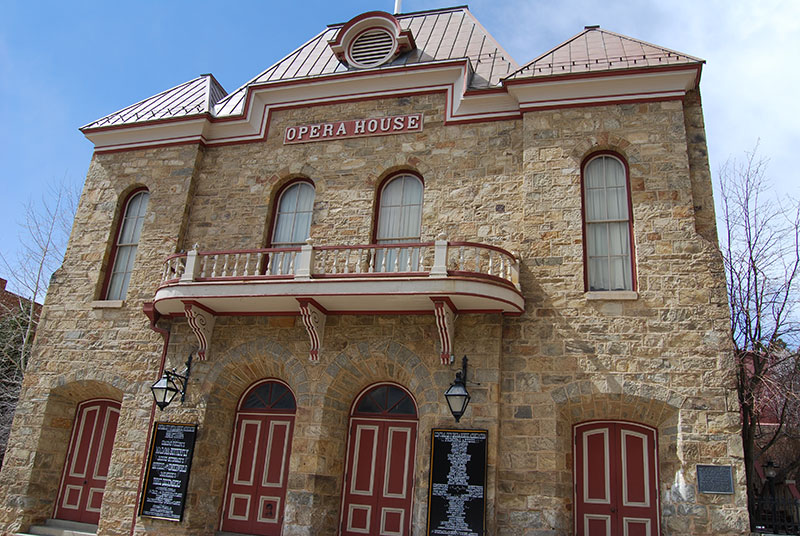
The book, soon to be released as a film starring Sam Riley and Kristen Scott, and directed by Walter Salles, is the perfect inspiration for any US road trip. Clasping a dog-eared copy, we visited Larimer Street in Denver, teeming with “downtown hipsters and hustlers … old bums and beat cowboys”, when Kerouac visited. It was this vibe that attracted him and his friend Neal Cassady another writer — Sal Paradise in the novel, and Dean Moriarty, Paradise’s sidekick. Urban renewal which began in the 1960s means Denver is very different now. But My Brother’s Bar, a poky place with $4 beers — where Kerouac drank — can’t have changed much. In Central City in the Rockies, Paradise describes going to the “beautiful little opera house built in the midst of shacks on the steep slope” of the old town. The elegant opera house is still there, with a piece of graffiti saying “Jack was here”.

At the Wyoming-Utah border, we did not see “God in the sky in the form of huge sunbathing clouds above the desert”, but we enjoyed Salt Lake City, where Moriarty “was actually born on the road, when his parents were passing through … in a jalopy on their way to Los Angeles”.

We rolled westwards, “balling the jack”, understanding the mindset of the book’s characters as we reached California: “Dean was happy again. All he needed was a wheel in his hand and four on the road”. And by the time we got to “Frisco”, as Moriarty said, we couldn’t go any further because “there ain’t no more land!”

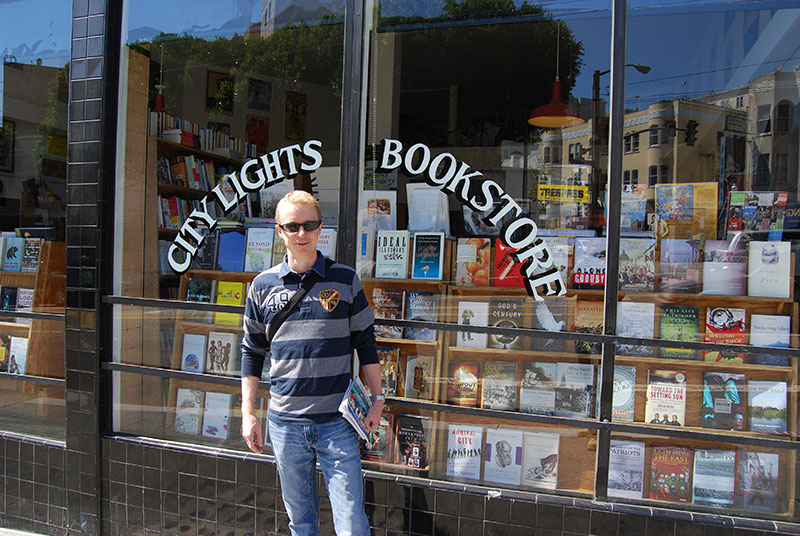
We visited the City Lights bookshop frequented by Kerouac, Cassady, Allen Ginsberg and other Beat writers. It’s even run by a Beat poet, Lawrence Ferlinghetti, now in his nineties. On the evening we arrived, the lines written on the sidewalk felt just right: “The air was soft, the stars so fine, the promise of every cobbled alley so great that I thought I was in a dream.”

First published in The Times, August 11 2012

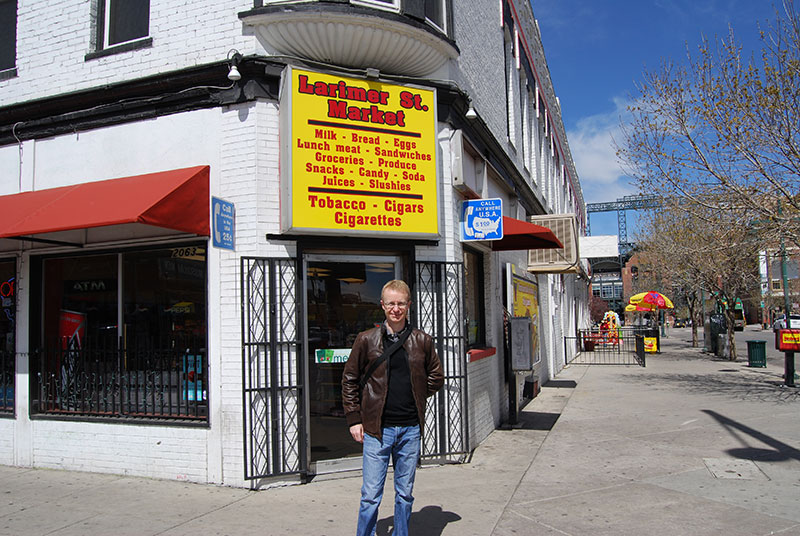
Larmier Street, Denver

At the beginning of the trip on Larmier Street, Denver

Larmier Street

Larmier Street

Opera House in Central City

Opera House in Central City, Colorado

Central City Colorado

Central City, Colorado

Interstate 80

On Interstate 80 through Wyoming

Passing a train in Wyoming

Passing a train in Wyoming – the kind Kerouac might have ridden on

Great Salt Lake, Utah

On the edge of the Great Salt Lake, Utah

On the road through Utah

On the road through Utah

Elko, Nevada

Elko, Nevada

Dreams of grander

“Dreams of grander” – homeless man in San Francisco

City Lights Bookshop in San Francisco

City Lights Bookshop in San Francisco

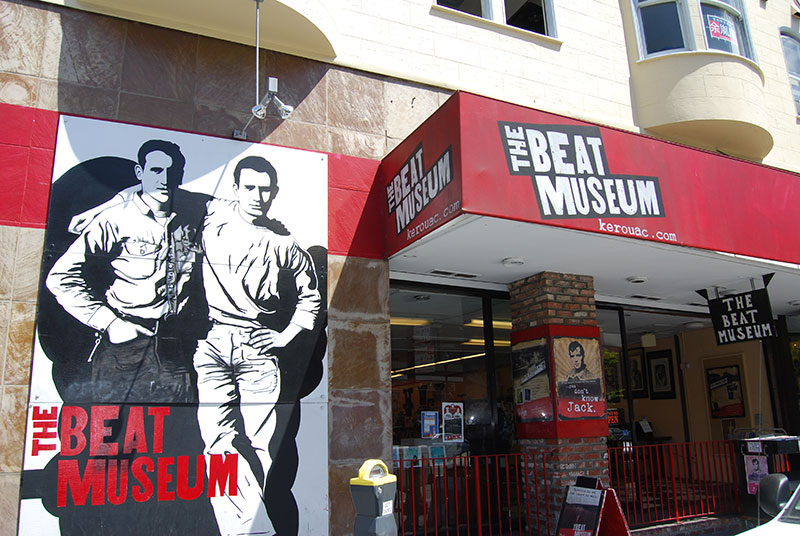
The Beat Museum San Francisco

The Beat Museum, San Francisco

Cedar Key, Florida — 80 minutes and a world away from Disney

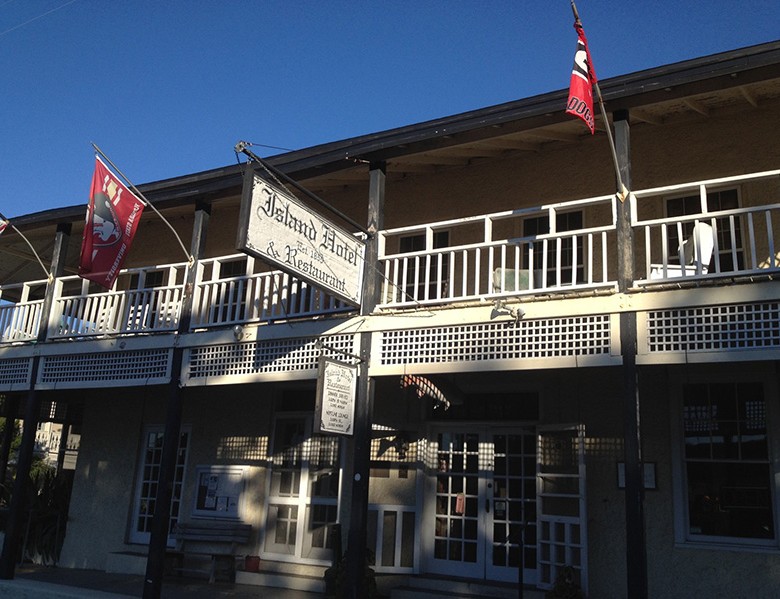
The Island Hotel Cedar Key

The Island Hotel, Cedar Key

On the way to the bridge to Cedar Key, I swerved to avoid a dead racoon. I was on a remote stretch of Route 24 with tall, spectral trees hanging with Spanish moss lining the road. Occasionally a pick-up truck with a gun-rack would pass in the opposite direction; the driver almost invariably bearded with a baseball cap, sometimes wearing camouflage hunting gear (reminding me of the film Deliverance).

Soft gold afternoon light filtered through the treetops. I came to a settlement with a clapboard Baptist church, a gun-shop ….. and not much else. Then the scenery opened out to the sea and soon a staccato sign by Cedar Key’s bridge announced: “When Flooded. Turn Around. Don’t Drown.”

Just two hours north of Orlando’s bustling theme parks and crowded souvenir shops, I had come to a remote part of the northwest coast of the Sunshine State, and it felt a million miles from Mickey Mouse.

Fortunately there were no signs of floods, so I pushed onwards, crossing a series of causeways linking small islands. These led to Cedar Key proper, and a little grid of streets of simple wooden houses with porches (and a fair few Stars and Stripes). A pelican swooped above, heading towards the rickety docks on stilts. I parked by a sloping whitewashed building with oyster shell and limestone walls and a two-tier wooden veranda on a quiet street near a run of little art galleries. I had reached my destination, the Island Hotel — one of the oldest places to stay in Florida, dating from 1859, and a far cry from all the Holiday Inns down south on Orlando’s International Drive.

Cedar Key is a sleepy spot on Florida’s Nature Coast, overlooking the Gulf of Mexico. It was lucky to miss out completely on the pollution caused by the Deepwater Horizon oil spill of 2010 (which damaged the coast about 200 miles away). Its cluster of islands is home to about 700 people including many artists, who have adopted the hideaway and created a bohemian community that mixes with the Deep South roots of the north of Florida to create a laid-back ambience that comes as a refreshing alternative to the hyped-up world of Florida’s mass-market tourism.

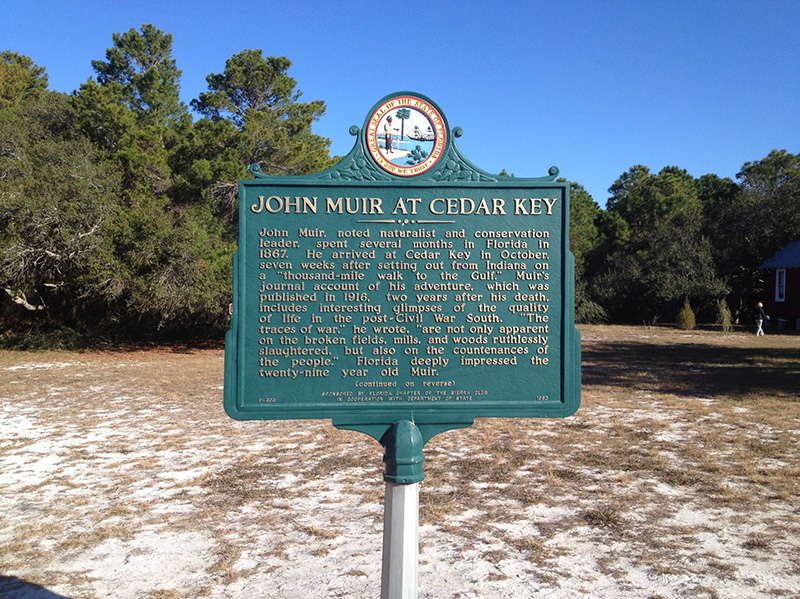
There are a handful of cute B&Bs but the Island Hotel is the best place to stay, with its scuffed wood floors, old-fashioned restaurant with ceiling fans, grand piano in the lobby, fish-shaped lamps and marvellous mural of King Neptune in the bar (which has a bullet hole from wilder days). The ten bedrooms come with creaky floors and slatted windows; some overlooking the big front balcony’s rocking chairs. It’s rumoured that it was once a whorehouse, and President Grover Cleveland is believed to have stayed in the 1890s, when Cedar Key was in its heyday as a port for ships to and from Havana. Another famous visitor was the Scottish-born naturalist John Muir, who completed his 1,000-mile walk from Kentucky to the island in 1867.

“Cedar Key is for artists and romantics,” said Stanley Bair, who runs the hotel with her husband Andy. “The artists love the light but there’s the rural culture, too. You still get old-timers called ‘crackers’. They used to herd cattle through the palmettos with small horses and dogs. They’d crack their whip to get the horses going — which is how they got their name. The small wooden houses round here are known as cracker houses.”

The docks are at the centre of Cedar Key, where there’s a stretch of down-to-earth seafood restaurants serving delicious oysters, clams and stone crabs. It’s a working harbour and the clams farmed in nearby waters are famous across the US, and sent in great quantities to restaurants in Boston and Las Vegas. Prawns and scallops are another speciality. It’s a seafood lover’s dream and I can recommend the Pickled Pelican for its fried oysters and grouper, crab cakes and “bourbon shrimp”. The latter are juicy prawns sauteed in a sauce of bourbon, honey, pecan and tomatoes.

Old-time boys and girls in jeans and checked shirts were having a get-together on my visit, drinking Key West Southernmost Wheat beer ($3.75 [£2.40] a bottle) — named after the more famous Floridian “key” at the southern tip of the state. Signs on the wall said “Time flies when you’re having rum” and “Free beer ….. tomorrow.” Meanwhile, at the fun Black Dog bar next door, folk were sampling the 50 different types of microbrewery ales, some of them sitting in quirky old barbershop chairs.

A small local museum in a park filled with cedar trees on a quiet spot on the two square mile island tells the local history including the Seminole Indian past and touches on the days when Captain Kidd visited, as well as the days of the Civil War, when the Confederates were defeated in 1864. A sign outside remembers John Muir’s arrival three years later, of which he wrote:  “The traces of the war are not only apparent on the broken fields, mills and woods ruthlessly slaughtered, but also on the countenances of the people.” He was aged 29 at the time and when he visited, the Island Hotel was a general store selling quinine, alligator and rattlesnake skins.

John Travolta, who lives in Ocala, about 70 miles inland to the east (in a house with enough land for his own airstrip), is a fan of the islands and many wildlife reserves, which cover almost 90,000 acres that are great for hiking and kayaking along the beautiful Suwannee River. After checking out the Shell Mound, just over the bridge to Cedar Key, where there’s a mini mountain of oyster and clam shells built up hundreds of years ago by Native American inhabitants, I went to see Ocala.

I was heading for the Silver Springs theme park, passing yet more pick-up trucks, some with “No-bama” bumper stickers against President Obama, who does not always go down well in the Deep South (I also saw a billboard showing a picture of Obama bending down in front of a sheikh, attacking his petrol price policies). Famed for its crystal clear spring water, the river has attracted tourists since the 1860s and it might be said to be Florida’s original theme park. It’s a gentle, relaxing spot with rides on glass-bottomed boats that give views of little fish and currents of fresh spring water swirling up from below — the perfect antidote to the mad rushing about at so many of the big attractions down in Orlando.

Many films, including Moonraker and Tarzan, have used the area for underwater scenes as the water is so clear. A display describes the movie-making past and which stars have passed by including Gary Cooper, Rock Hudson and Jane Russell, who starred in a flick appropriately called Underwater! Families were relaxing, taking it easy, eating ice creams and going for strolls along the Silver River in the botanical gardens, where you can see more than 130 species of plants.

Ocala is largely residential and it’s known far and wide for the adjacent Ocala National Forest — a massive subtropical forest covering 383,000 acres, established in 1908. Here I met James Buckner, a guide who took me to Juniper Springs. This was a gorgeous, oasis-like place in the forest where you can go for a dip in the wonderfully chilled water.

We stroll along a wooden walkway with claw marks on it from black bears. “They’re never known to attack humans,” reassured James, passing under magnolia trees and past thick fern and saw palmetto. James told me he loved it so much in Juniper Springs, he got married by the river, close to where three guys on kayaks were about to head off when we arrived.

Birds tweeted. Light fell in shards through the forest canopy. No one else was about, yet we were only 80 minutes’ drive north of Orlando. He looked around and sighed: “Disney World is an artificial world. This is the real world.” Anyone who wants a mini-break from Mickey, doesn’t have to travel far.

Need to know

Where to stay
Tom Chesshyre was a guest of the Island Hotel on Cedar Key (00 1 352 543 5111, islandhotel-cedarkey.com), which has B&B doubles from $80 (£50). Mermaid’s Landing (mermaidslanding.com), also on Cedar Key has cute self-catering cottages from $57 (£36).

Where to eat
Try out the superb grouper sandwiches in the bar at the Island Hotel, or the main restaurant serves more formal meals including fresh crabs, clams and scallops. The Pickled Pelican (pickledpelicanonline.com) on the docks is a great place to soak up an (unintimidating) flavour of the Deep South, with sandwiches, salads and chowders galore.

What to see
Cedar Key Museum State Park (floridastateparks.org/cedarkeymuseum), Ocala National Forest (fs.usda.gov/ocala), Nature Coast Trail State Park (visitnaturecoast.com). Entry to Silver Springs in Ocala is free (silversprings.com) but glass-bottom boat rides are $12.99 (£8.30) for adults and $9.99 (£6.35) for children.

Further information
Visit Florida (visitflorida.com), Cedar Key Area Chamber of Commerce (cedarkey.org).

First published in The Times, August 24 2013

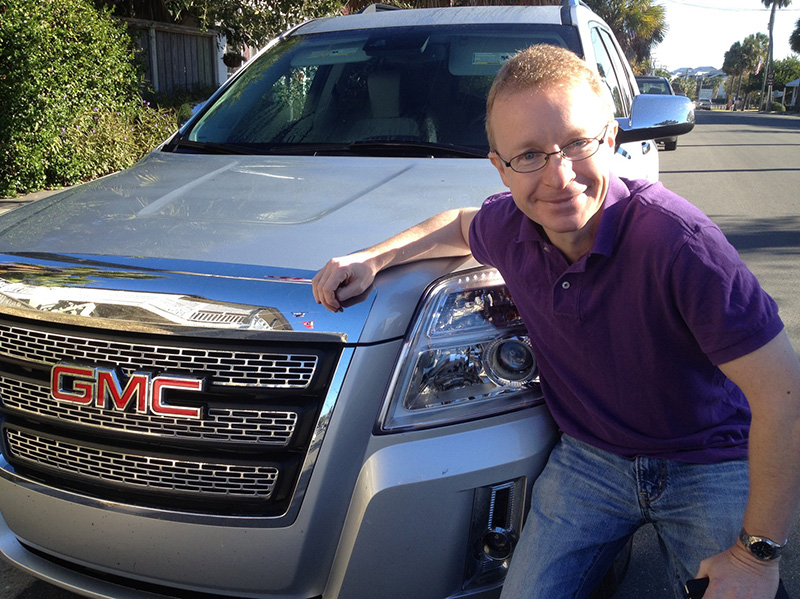
My Hire Car John Muir Museum

Colombia: after the druglords, the tourists

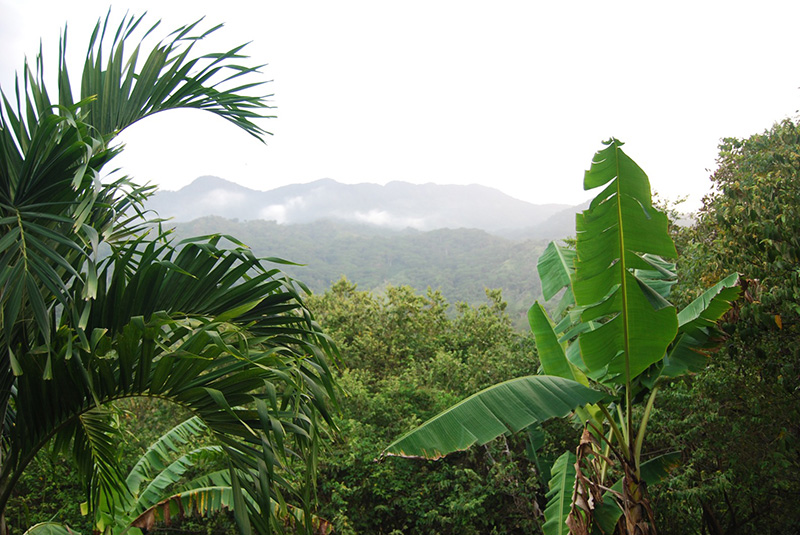
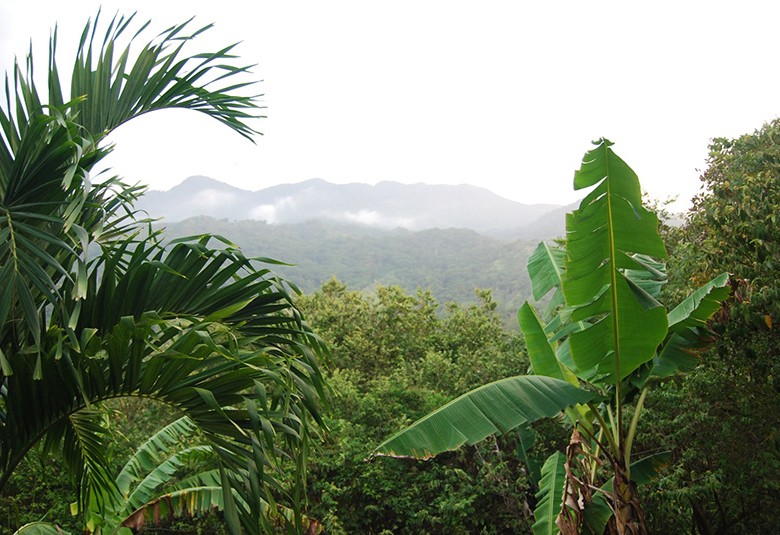
View from a San-Rafael lodge

View from a San Rafael guest lodge, about 30 miles east of the Spanish colonial town of Santa Marta, close to the Caribbean coastline

It’s a beautiful sunny morning in the foothills of the Sierra Nevada and I’m talking to a man with a squint who used to grow coca leaves for some of the biggest cocaine drug lords in Colombia.

Not perhaps a typical holiday encounter. As cicadas screech and cockerels echo in the valley, Robinson Pérez Navarro tells me about his old job. “I worked in a laboratory for five years,” he says, pointing towards the jungle as he explains how a team of 20 people hiding in the mountain would add gasoline, caustic soda, chalk, potassium, sulphuric acid and salt to crushed coca leaves to begin making the Class A drug.

“It was just work. We would leave the fields alone for three or four months and then we would harvest the crops. There were 20 of us in the lab. The chemicals we required were delivered by donkey.”

This was often tricky. “Sometimes the police would come and everyone would run.” The donkey would be left with the incriminating evidence, not knowing what all the fuss was about as men raced about with guns.

Many times the army located laboratories. “We would throw up our tools and disappear into the jungle. They didn’t chase. They knew that we were just being used by the drug lords. Back then, this place was very violent and dangerous.”

Learning the ins and outs of cocaine production is all part of the experience at a series of guest lodges in the north of Colombia owned by former coca farmers. In areas that were once out of bounds to holidaymakers, the Government has brought order by fumigating coca crops and driving out guerrillas. The result is that kidnappings and violence are a thing of the past at the main tourist sights.

I’m staying at the San Rafael guest lodges, about 30 miles east of the Spanish colonial town of Santa Marta, close to the Caribbean coastline (a lovely stretch that feels as though it’s the Caribbean’s forgotten coast). The lodges were opened with the help of government and United Nations cash four years ago, but since then about 20 others have sprung up near by.

San Rafael is wonderfully peaceful. My guesthouse (or posada) is at the top of a hill surrounded by banana plants and mango trees. Butterflies flutter around pink flowers by a wooden deck with a small table and a hammock. Inside, two single beds are covered by mosquito nets and a fan. The roof consists of dried plantain plant leaves and the lodge is open on the sides, letting in wafts of air. On a wall by a bare lightbulb, a yellow lizard resides, minding its own business, except for the occasional skilful flick of its tongue to capture a fly.

It makes an intriguing place to stay (about £35 a night) for a couple of days on a tour of Colombia’s Caribbean coast. On my first night, after a fish, plantain and rice meal in the open-air dining area with a dirt floor and a flickering TV showing Spanish soap operas, I meet some of the other lodge owners … feeling almost as though I’ve settled into rural Colombian life.

Zunilda Ramírez, who also used to grow coca leaves, smiles and says: “We used to earn five times more with coca, but our quality of life is much better now. The law used to be on top of us the whole time: helicopters every day. Now we have tranquillity. That does not have a price.”

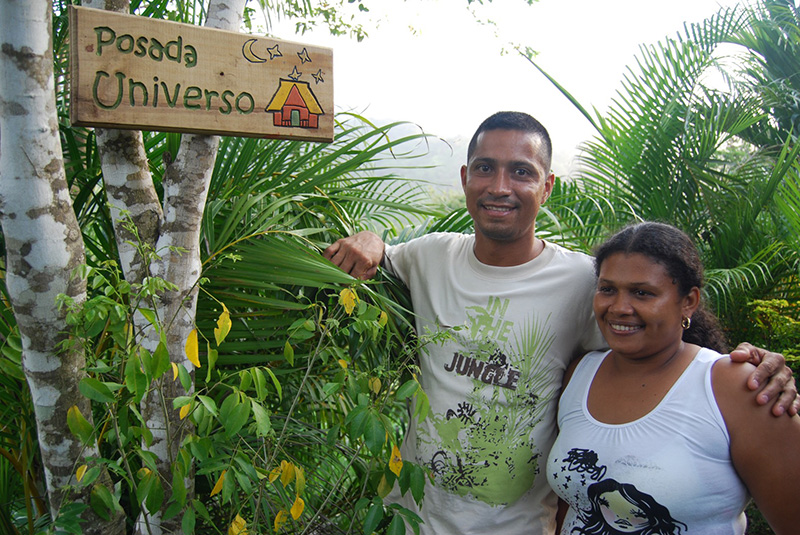
She and her husband Fabio have five children. “Yes it was an exciting time and there were a lot of parties round here,” says Fabio, who is wearing a T-shirt with a slogan that appropriately enough reads “In the jungle”. He continues: “It was good money. But deep down we knew it was not good for the children.”

The great thing about the lodges is that there is also so much to see near by. With a local guide I visit Santa Marta, a vibrant, slightly ramshackle town with multicoloured houses and tiny lanes dating from Spanish colonial times. This was where the conquistadors first settled, when the explorer Rodrigo de Bastidas arrived in July 1525. His remains are in the elegant white cathedral by the central square.

Afterwards we drive to Quinta de San Pedro Alejandrino, where Simón Bolívar died of tuberculosis in 1830. The revolutionary and military strategist, who had survived several attempts on his life, had planned to visit Europe to get away from his troubles. But he ended up staying on the coast because he was seriously ill.

His final home is now a place of national pilgrimage. Bolívar is regarded as the hero who finally defeated the Spanish in 1819. There is a statue of him, with a wrinkled brow and a stern look, next to a huge saman tree crawling with iguanas.

Nearby, in the old farmhouse, you can see the bed on which he died. “He is like our George Washington. But while George Washington liberated only one country, Bolívar liberated five: Colombia, Venezuela, Ecuador, Bolivia and Panama,” Juan, my guide, says.

We are just about the only visitors, as we are later when we visit Tayrona National Park. This is a wonderful jungle setting right by the coast, with tracks through rainforest teeming with monkeys and lizards.

The park must be one of the most undiscovered parts of the Caribbean. When we walk along a trail to the sea we pass a group of tiny Kogi indigenous people. They live off the land and play no part in mainstream Colombian life. The men and women stand no higher than 5ft and are wearing sack-like clothing.

They peer at us shyly and one of them points at my watch. He is curious about the time. “They have no concept of time,” my guide says. “They do not even know how old they are.”

It’s an extremely odd sensation, seeing such an out-of-the-way place, just as it is staying at the San Rafael lodges … odd, but very interesting, too.

Need to know

Getting there Original Travel (originaltravel.co.uk) offers ten-day tailor-made trips in Colombia that include two nights staying at the tourist lodges owned by former coca plantation farmers in Tayrona, from £1,995 pp.

Kuoni (kuoni.co.uk) and Last Frontiers (lastfrontiers.com) also covers Colombia.

Further information Proexport London, Colombia Tourist Office (020-7491 3535, www.colombia.travel) offers information on the country’s many tourist sights. Tourist lodges (posadasturisticas decolombia.com).

Security For latest Foreign & Commonwealth Office advice: fco.gov.uk.

Reading Colombia Handbook by Charlie Devereux (Footprint, £14.99), One Hundred Years of Solitude by Gabriel García Márquez (Penguin, £9.99) are evocative of the sleepy feel of the countryside in the north of Colombia near the tourist lodges.

First published in The Times, February 5 2011

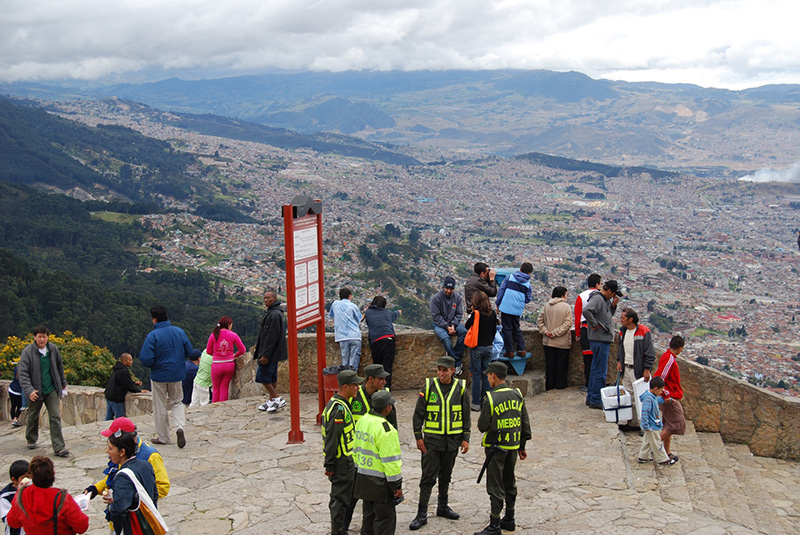
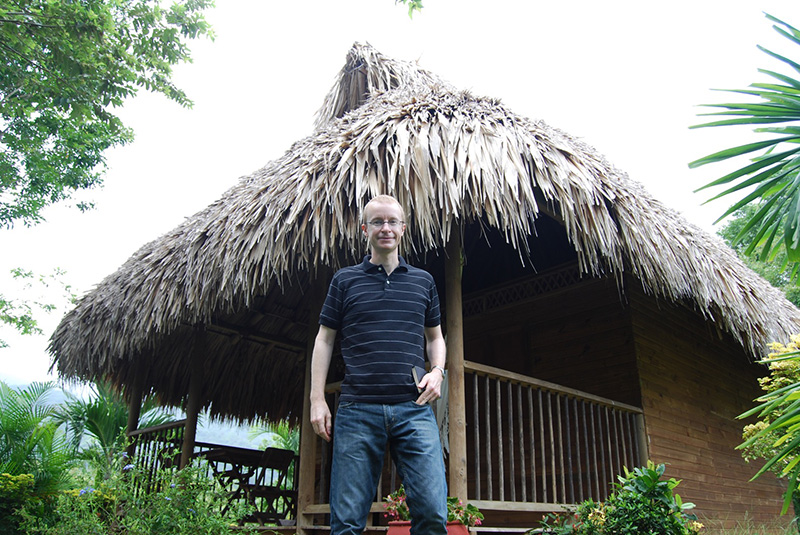
View from above Bogota Outside my lodge Lodge Owners

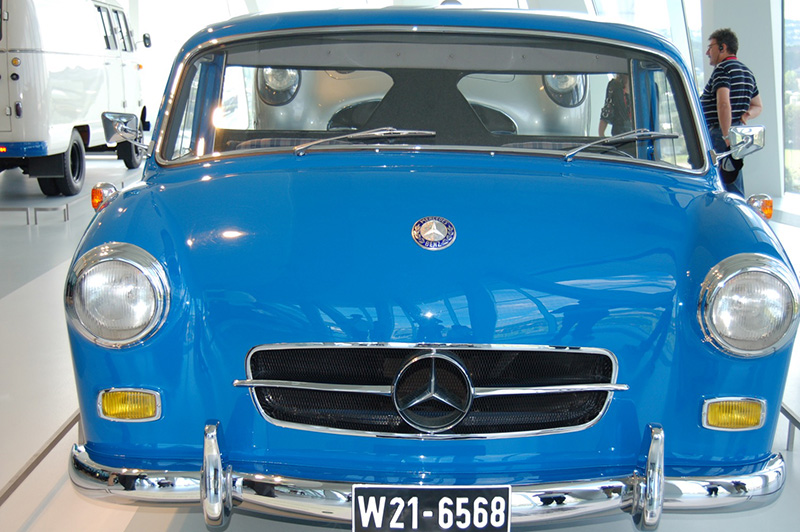
Stuttgart’s Mercedes-Benz museum

Mercedes-Benz-Museum

Not everyone at the end of the 19th century was convinced by the newfangled “self-propelled cars” being built by Karl Benz and Gottlieb Daimler. After the creation of their first models, in 1886, the German Kaiser Wilhelm II asserted: “I do believe in the horse. The automobile is no more than a transitory phenomenon.”

That quote is engraved in gold on the base of a display featuring a stuffed white horse at the entrance of the multimillion-pound museum devoted to all things Mercedes-Benz, next door to its research, engine development and testing track on the edge of Stuttgart.

“You like the horse, eh?” says Monica Kleinedam, our guide, who is dressed in a charcoal grey suit, orange scarf and white blouse, and looks as if she could be about to make a presentation to a board of directors at a City firm. “That is what one horsepower looks like. Now we are going to see more . . .”

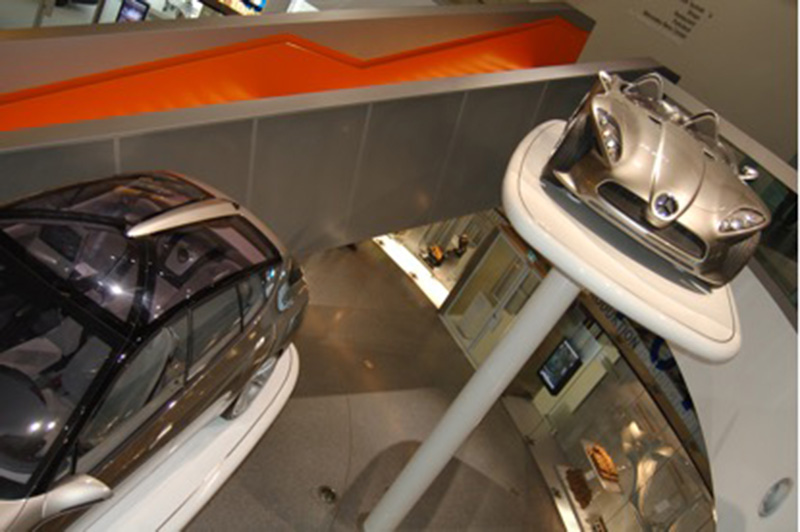
The Mercedes-Benz Museum makes a bold statement. From the outside it looks like the Guggenheim Museum in Bilbao — a gleaming metallic structure with graceful curves and tinted glass, next to a flyover leading to the city centre.

The proximity to the highway is not coincidental. “The Dutch architects wanted to be by the motorway,” Kleinedam says. “They won the contract for the design because they said, ‘If you are showing cars you should be close to cars’.”

Next to the motorway is the Mercedes-Benz plant. Cars zoom around its test track. Speeding vehicles, including lorries and buses, cling to a curved wall as centrifugal forces and gravity do their bit. But just as impressive as the building is the fantastic collection of Mercedes-Benz cars, the most extensive in the world.

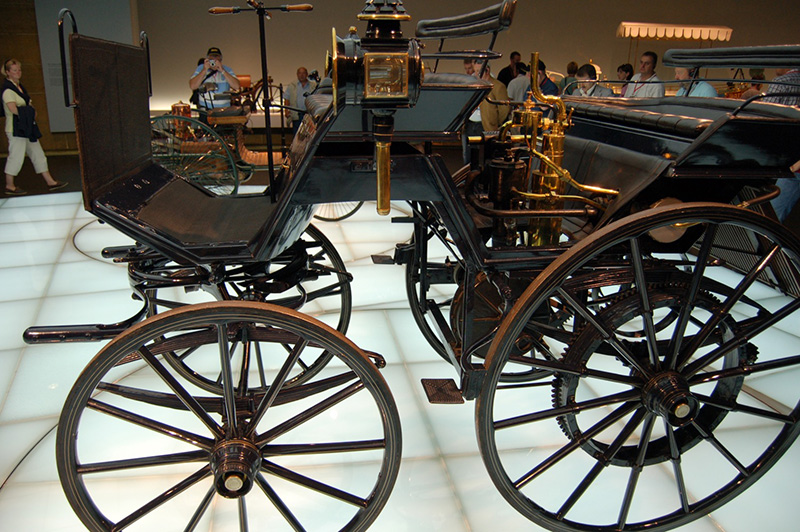
Gottlieb Daimler, a former gunsmith’s apprentice, built the first four-wheel, petrol-powered motor vehicle in 1886. Cumbersome steam-powered road vehicles date back as far as 1769 in France, developed by Nicolas-Joseph Cugnot, but this was a whole new ball game.

Daimler’s vehicle looked like a horse-drawn carriage — without the horse — and had a top speed of 11mph (17km/h). To put that in perspective, the Jamaican sprinter and world record holder Usain Bolt reaches speeds of 27mph during the 100 metres.

In a display unit is the “legendary Grandfather Clock” engine, which developed 650rpm compared with previous limits of about 200. “This is the beginning of driving,” Kleinedam says as she leads us to Karl Benz’s three-wheel version, also created in 1886.

Benz, the son of an engine driver, was, like Daimler, brought up near Stuttgart. He ran a foundry supplying building materials, and began experimenting with engines in the 1870s.

Fans of Top Gear could spend a lot of time in this museum, I soon realise.

As we wind our way around the circular building, we see more rickety-looking early designs, as well as the world’s first petrol-engined fire engine, developed by Benz in 1892, and the first bus, adapted by breweries to carry barrels. “The horses were quite happy with this invention,”Kleinedam jokes.

A display shows early “gentlemen drivers”, who broke with the tradition of chauffeur-driven vehicles and took the wheel themselves.

Most seemed to favour large moustaches, white suits and pith helmets, a dress code that apparently was all the rage around Stuttgart in the late 19th century.

By 1900 the cars were zipping along at 35mph as Daimler led the way with vehicles with radiators at the front that allowed engine parts to cool more efficiently. Soon after, a local businessman began entering races with Daimler cars under the first name of his daughter, Mercedes. They were hugely successful, and “Mercedes” stuck — later becoming Mercedes-Benz when the companies merged in 1926.

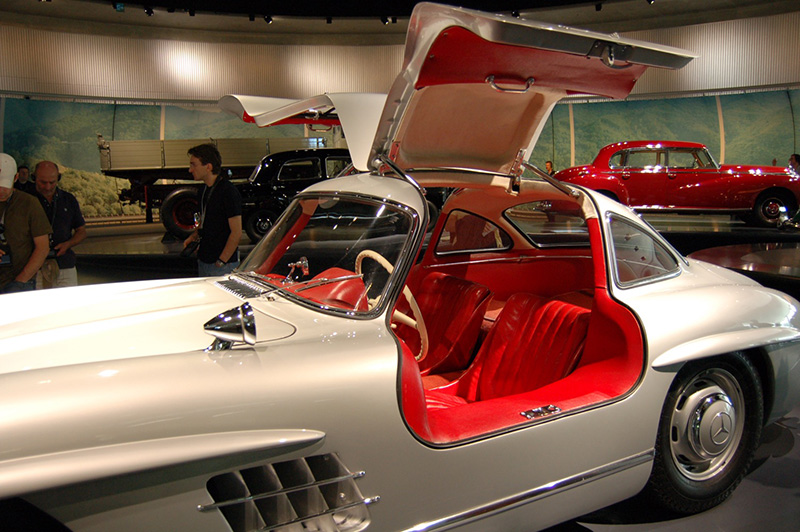
As this history develops, the cars get better and better. By the mid-1920s there are gorgeous, red, low-slung sports cars with top speeds of 100mph, limousines with diesel engines in the 1930s, and futuristic, silver, bullet-like cars with plush red leather interiors and flip-up doors in the 1950s.

“They were very interesting if you had a young lady in a short skirt who wanted to get out, ” Kleinedam says.

On display in the museum’s side rooms are early lorries, police cars, Formula One racing cars, vans, taxis and even a “Papa Mobile”, created for Pope John Paul II in 1980. After the 1981 assassination attempt a bulletproof version was produced.

The colours of the 1960s models are glorious: deep oranges, emeralds and ruby reds, all making you wonder why manufactuers are so conservative now with their greys, silvers and blacks.

Kleinedam tells us that seatbelts were patented in 1903 and became compulsory in Germany in 1976 (Britons were made to wear them in front seats in 1983). And we see a series of gleaming racing cars covered in advertisements for Bridgestone, Vodafone, Esso and Mobil.

By this stage there is no doubt: Wilhelm II was definitely wrong. Or perhaps, if the green brigade has its way and restrictions are placed on “carbon criminal” driving, he was right — but just didn’t know why.

Either way, the Jeremy Clarksons of the world will enjoy the Mercedes-Benz Museum.

Need to know

Mercedes-Benz Museum (00 49 711 1730000, www.mercedes-benz.com/museum), Mercedesstrasse 100, Stuttgart. Admission £5.50.

Mo.hotel (00 49 711 280560, www.mo-hotel.de), Hauptstrasse 26, Stuttgart, is owned by DaimlerChrysler and has rooms from £87 a night.

British Airways (www.ba.com) has return flights from Heathrow to Stuttgart from £116.

First published in The Times, June 20 2009

Pictures from the museum

Mercedes-Benz-Museum Mercedes-Benz-Museum Mercedes-Benz-Museum

On the trail of Kate and Wills

On the trail of Kate and Wills

William and Kate apparently discussed getting married for the first time in the summer of 2007 in the Seychelles — they like to get out and about, as they’re movements even before getting married showed…

Mustique, St Vincent and the Grenadines
They love it. They’ve been several times. It’s expensive, exclusive and where A-list celebs such as Mick Jagger, Tommy Hilfiger, Shania Twain and Bryan Adams own villas. The royal couple are said to enjoy a drink at Basil’s Bar, the only drinking hole, where Prince William has a preference for vodka with cranberry juice, while Kate goes for Sunset Premium rum cocktails. Their last visit to the tiny island — which has about 100 villas and a single hotel (the Cotton House) — was in August 2009.

During their holidays on Mustique it is believed that they have stayed at Villa Hibiscus, which is usually let at £10,000 a week and is set on a hill with an infinity pool and five bedrooms. The Prince’s group was seen playing volleyball and Frisbee, and Prince William has, island moles report, played tennis with Richard Branson. Other celebrity visitors to Mustique, where most people travel around by “mule” (the local nickname for golf buggies), include Kate Moss and Amy Winehouse. And, of course, there’s already a royal connection. Princess Margaret, who went on a Caribbean cruise for her royal honeymoon with Lord Snowdon, built Les Jolies Eaux on the island in the 1960s after being given a plot of land as a wedding present. Regular visitors have included Jagger and Lord Lichfield, her cousin .

Go like a royal Carrier (0161-491 7620, carrier.co.uk) offers seven nights at The Cotton House (cottonhouse.net) from £1,775pp, including flights from Gatwick and transfers. Villa Hibiscus (villarentals@mustique.vc, mustique-island.com, 00 784 488 8000) is from £10,000 a week, including chef, maid, butler and gardener.

Desroches, The Seychelles
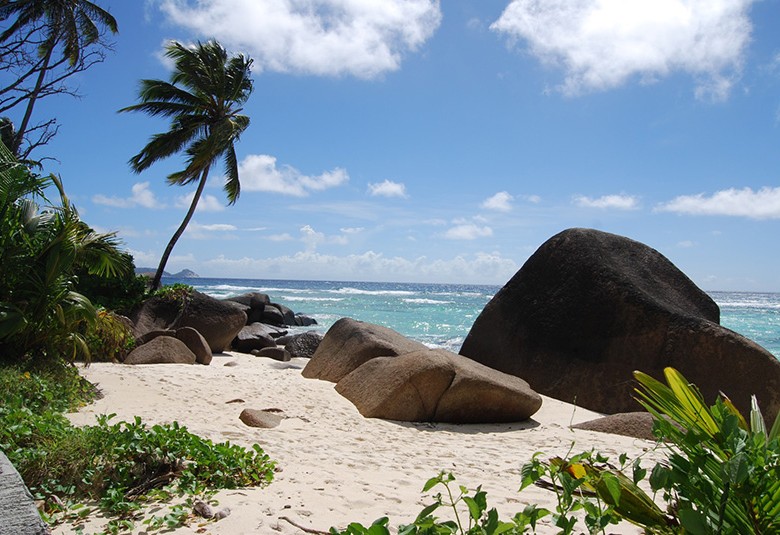
After a three-month split in 2007, the royal couple rekindled their romance on a break on the small Indian Ocean island of Desroches in the Seychelles, about 230km (143 miles) southwest of Mahé, the capital. The island is less than 5km long, has a population of about 50 and is surrounded by 14km of beautiful white-sand beaches. Apparently it was here that they first discussed marriage after their reconciliation following their April split.

The island, encircled by coral reefs, consists of a series of modern beach villas, with minimalist interiors and exposed wood floors. Each villa comes with a pair of bicycles for getting about, and is set amid tropical gardens no more than 25m from the sea’s edge.

While they were there, Prince William and Kate went on fishing trips and played pool with a honeymooning couple — who later told a newspaper that Prince William encouraged his counterpart to “snooker” Kate. On one fishing trip Prince William caught a barracuda, which the couple later ate. Kate used Soltan sun cream, which fellow guests noted with approval as showing a down-to-earth touch.

Go like a royal Elite Vacations (01707 371000, seychelleselite.co.uk) offers a week’s all-inclusive in a junior suite from £3,349pp.

Lewa Wildlife Conservancy, Kenya
Prince William popped the question on the edge of Lake Rutundu last October, in the foothills of Mount Kenya (10,200ft above sea level). He and Kate had been staying at Lewa Downs, an upmarket safari lodge owned by Ian Craig, whose daughter Jecca is a close friend. But to get some privacy, the couple flew by helicopter to the nearby Rutundu Log Cabins, two rustic-chic cabins by the lake, where a bottle of chilled champagne was waiting in an outdoor cupboard to celebrate the engagement in case of a “yes”.

When this was duly delivered, they spent an evening in one of the isolated cabins, usually popular with fishermen. Each cabin has rough wooden beams and moss on the log walls. There are also open fireplaces and sheepskin rugs. “Thank you for such a wonderful 24 hours,” Kate wrote in the visitors’ book, “I love the warm fires and candle lights — so romantic! Hope to be back again soon.”

After Eton, Prince William spent some time on the Lewa Wildlife Conservancy during a gap year. Kenya holds a special place in royal hearts because it was at the Treetops Hotel in Nyeri that Queen Elizabeth learnt in 1952 that her father, George VI, had died and that she had succeeded to the throne.

Go like a royal Rutundu Log Cabins (laikipiatourism.com), both cabins are from £282 a night; they sleep eight. A week in a Lewa Wildlife Conservancy cottage is from £2,844pp with W&O Rainbow Tours (020-7226 1004, rainbowtours.co.uk). President Clinton once stayed there.

Klosters, Switzerland
This upmarket Swiss ski resort, a long-time favourite of the Prince of Wales (one of the ski lifts is named after him), is home to a couple of Prince William and Kate Middleton “firsts”. Their relationship first became public when they were pictured skiing there together in March 2004. During this trip Prince William was reported as saying: “I don’t want to get married until I’m at least 28 or maybe 30.” They were later, in January 2006, photographed kissing for the first time at the resort, creating a media storm.

Prince Charles usually favours the five-star Walserhof Hotel, where he has taken Prince William and Prince Harry. Before the Prince married Lady Diana Spencer, she was a member of one of his royal skiing parties, sparking rumours about an impending marriage. While Prince William enjoys the hotel, he is also believed to have stayed at a chalet costing as much as £69,000 a week on one trip with Kate. His wife-to-be is thought to be a better skiier than the Prince, although he is said to have once accosted a paparazzo who was struggling to follow them and said: “You ski like a girl.”

Go like a royal Ski Solutions (020-7471 7777, skisolutions.com) offers a week’s B&B at the Walserhof from £1,340pp, including transfers and flights. Oxford Ski (01865 398130, oxfordski.com) offers a week at chalet Eugenia, rumoured to be where Prince William and Kate stayed, from about £30,000 a week.

Restormel Manor, near Lostwithiel, Cornwall
The Middletons spent a few days at Restormel Manor over Christmas in 2009. The manor is part of the Prince of Wales’s Duchy of Cornwall estate, though it is believed that the family paid full whack for their stay; about £3,000 a week. Prince William is said to have recommended the nine-bedroom property, which sleeps 18, with three sitting rooms, a boot room, an indoor pool and a tennis court (Kate is a decent player). He did not go over that Christmas period but has previously stayed along with Prince Harry.

Restormel Manor is 500 years old and the largest of several properties on the site, about one mile outside Lostwithiel; the smallest cottage sleeps four. It’s at the head of the Fowey valley beside the River Fowey and close to Restormel Castle. The manor has a wood-chip boiler, in line with Prince Charles’s love of all things green.

Prince William and Kate are Cornwall fans. The tourist board says that they celebrated the Prince’s 27th birthday at “a secluded cottage using the names Mr and Mrs Smith”. It also says that they had a picnic with friends at Polkerris Holiday Park in Par, while Prince William and Prince Harry have watched a rugby match at the Royal British Region Club in Fowey.

Go like a royal Premier Cottages (01579 346473, premiercottages.co.uk) has the smallest Restormel cottage at £400-£750 a week; the manor is £750-£3,250.

St Andrews, Scotland
The University of St Andrews is, of course, where it all began. The royal couple first met in September 2001 while studying art history (though Prince William later switched to geography, achieving a 2:1). But it was the famous charity fashion show during which Kate modelled a sheer black lace dress that really caught the Prince’s attention; he was pictured craning his neck to see her.

This show was held at the Fairmont hotel, a five-star retreat on a clifftop, set in 520 acres with a golf course and a spa. The Prince regularly used the hotel’s gym and spa during his undergraduate days. He also “enjoyed fruit cocktails in the Atrium and Kittocks Den”, according to the hotel. The fashion show was held where the Squire restaurant is now located.

Prince William’s favourite bar, however, was at the St Andrews Golf Hotel. He often enjoyed pints of cider here with friends. The unpretentious drinking hole now boasts of its cocktail shooters, pitchers of beer and “Cheesy Tuesday nights with DJ Charlie”.

After living in St Salvator’s Hall in his first year, the Prince moved to a townhouse on Hope Street, close to the beautiful beach on West Sands, where he often walked with Kate.

Go like a royal Fairmont St Andrews (01334 837000, fairmont.com) has two-night “Royal Wedding” packages on April 29 from £229pp.

The Cotswolds
The Cotswolds have been a favourite haunt for Prince William and Kate during their courtship. They have been to the races at Cheltenham, and Kate was also once invited to the Royal Box for the Cheltenham Gold Cup without the Prince, when the Prince of Wales and the Duchess of Cornwall were hosts. They have also attended events at the Beaufort Polo Club, near Tetbury, where Prince William and Prince Harry have played in front of Kate (with paparazzi lurking all over the place).

Not far away in Sherston, Wiltshire, Prince William has been known to enjoy a drink at the Rattlebone Inn, a 17th-century pub with a roaring fire, exposed beams and a flagstone floor. The pub serves Young’s real ales as well fruity clarets and the menu includes pigeon breast and black-pudding salad and confit of Gloucester Old Spot pork belly with scrumpy cider gravy.

The Wild Duck at Ewen, near Cirencester, has also lured the Prince in for a tipple or two. It’s a traditional 16th-century inn with lots of nooks and crannies and dried hops hanging from beams, plus a dozen designer bedrooms at the back. Food includes venison burgers and Thai curries, and a bottle of 1997 Château L’Angelis Grand Cru Classe St Émilion will set a prince back £150, though William is said to prefer pints.

Go like a royal Cheltenham Racecourse (cheltenham.co.uk); Rattlebone Inn (the rattlebone.co.uk); Wild Duck Inn (thewildduckinn.co.uk), doubles from £110.

Chelsea, London
Away from the London limelight Prince William and Kate have hung out at the Builders Arms in Chelsea. The gastro pub is in a Georgian building with wood-panel walls tucked away on Britten Street, just off the King’s Road. The menu includes poached salmon salad, devilled kidneys on toast and beer-battered fish and chips. Another favourite is Julie’s Restaurant and Bar in Holland Park, where they have eaten regularly and occasionally dined at a table with red curtains that can be drawn for privacy.

To party like a royal, Mahiki is the Hawaiian-themed nightclub to try, on Dover Street in Mayfair, and run by Prince William’s close friend Guy Pelly. The Prince has visited many times as have other royals and celebrities such as Jay-Z, Kate Moss and Rihanna. The club is set over two floors and offers £5,500 jeroboam bottles of Cristal champagne. Pelly has also recently opened Public, a Prince William and Kate-friendly bar in Chelsea offering a “virgin industrial glam clubbing heaven” .

Go like a royal Builders Arms (geronimo-inns.co.uk), Julie’s Restaurant (juliesrestaurant.com), Mahiki (mahiki.com), Public (public.uk.com).

Balmoral, Scotland
In the early days of their romance, Balmoral was where Prince William got to know Kate, whose parents recently visited and were photographed at the estate. Ingrid Seward, editor of Majesty magazine, which pitches itself as the “Quality Royal Magazine”, believes that the honeymoon will include at least a few days at the 50,000-acre property. It’s not such a wild guess given that six royal honeymoons have taken place at Birkhall, Prince Charles’s residence on the vast estate, including the Queen and Prince Philip’s in 1947 (they also spent some time at Broadlands, the Mountbattens’ country house near Romsey in Hampshire). Edward and Sophie took their honeymoon at Birkhall, as did Prince Charles and the Duchess of Cornwall.

Go like a royal Hilton Craigendarroch (01339 755858, hilton.co.uk) is about eight miles away, with doubles from £158.

Coast to coast, Canada
Six weeks after their honeymoon, the couple’s first official overseas tour will be a nine-day trip to Canada, departing on June 30. The east-to-west journey will take in Alberta, the Northwest Territories, Prince Edward Island, Quebec and the National Capital Region. On Canada Day (July 1) it is believed they will be in Ottawa for celebrations. Prince William last visited the country, one of the 15 overseas realms of which he will one day be King, in 1998 when he was 15. The Prime Minister of Canada, Stephen Harper, has promised to “provide them with all that our country has to offer” and is believed to be planning a royal banquet.

Go like a royal Bon Voyage (0800 3163012, bon-voyage.co.uk) offers a 15-day tour across Canada by train travelling from Toronto and taking in Winnipeg, Jasper, Lake Louise, Banff, Kamloops and Vancouver costing from £2,669, with five-star hotels along the way, two nights in sleeper compartments and flights.

Anglesey, Wales
When the dust of the royal wedding and the honeymoon settles so will Prince William and Kate: in Anglesey. For Prince William it will be back to work at RAF Valley, where he began a three-year posting as a search and rescue helicopter pilot in April last year. He rents a remote, £750-a-month cottage on the island and is said to enjoy walking in the countryside with Kate. They’re often spotted out and about (complete with security guards), and have enjoyed a drink or two at the White Eagle at Rhoscolyn — which has a fine selection of real ales and terrific views to Snowdonia.

Prince William is also said to go with his RAF pals to the Valley Hotel, near his base — sometimes on its quiz night. He and Kate occasionally go for meals at the grand Plas Dinas Country House, just across the water from Anglesey. The Prince also orders royal takeaways from the Flaming Grill burger bar. Meanwhile, Kate shops at the local Waitrose . . . apparently.

Go like a royal White Eagle (white-eagle.co.uk); Valley Hotel (valley-hotel-anglesey.co.uk), Plas Dinas Country House (01286 830214, plasdinas.co.uk) has doubles from £140.

First published in The Times, April 16 2011

Poland’s tooth tourism

Poland’s tooth tourism

Szczecin in Poland is a long way for a trip to the dentist, but Tom Chesshyre still comes up smiling.

THIS is not my idea of fun — absolutely, positively not. To my way of thinking, holidays and dentists are about as far apart as possible. While one represents pleasure, the other — usually, with my teeth — equals pain.

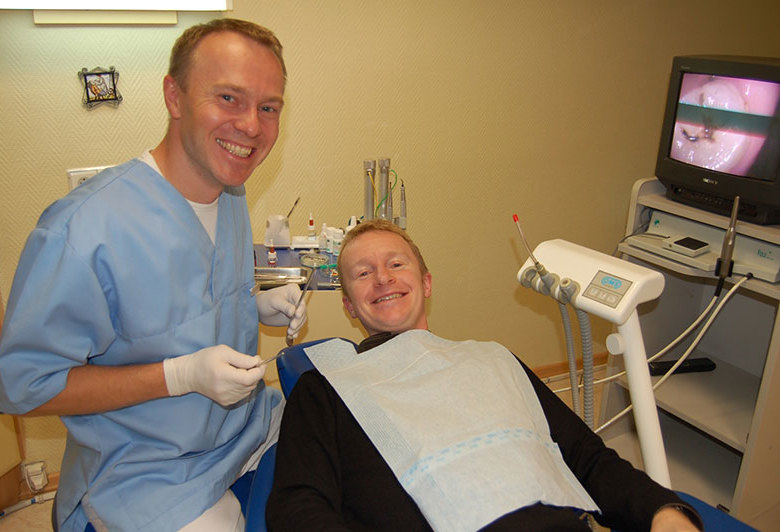
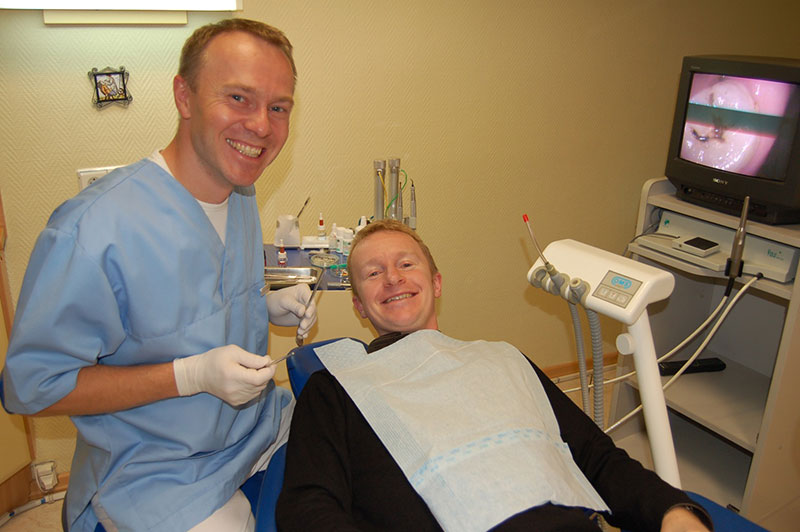
But here I am in a city I’d never heard of until I booked my flight for 1p each way plus taxes (grand total: £24.63) — Szczecin in Western Pomerania in northwest Poland — lying with my mouth open and a Polish dentist checking my molars.

“Ah, Mr Chesshyre, you do not have the whitest of teeth,” says Dr Cezary Turostowski, who runs Dentus, a dental practice that offers treatments for roughly a third of prices in the UK — a filling with a consultation is about £20, a bridge £700, an extraction £30, a crown £200. He has been recommended by the manageress at my hotel, the Radisson SAS, and all his staff speak English; appointments should be made about a week in advance.

“But they are healthy. They have lots of calcium. They are strong teeth,” he says. “It is not natural to have sparkling white teeth.” (Laser whitening costs £200 and takes about 40 minutes.) “Your teeth are right for you. Strong and healthy. . . ah, but you have a cavity!” Great. “OK,” I say, out comes the drill and 20 minutes later the deed is done. I am officially a “dental tourist”, just like thousands of Danes who come each year, and the handful of British tourists who have heard of the cheap, high-standard treatments.

It’s enough to put a smile on your face — which is exactly what you want as Szczecin is hoping to be the next big party destination in Eastern Europe, for those tired of Riga, Tallinn, Vilnius and Bratislava.

Post-filling, I decide it’s time to get my teeth into the nightlife. I meet up with Wojciech, Anna and Elvi — twentysomethings who know the best places to go.

We eat at the Renaissance restaurant at the Radisson, considered one of the best in town. I have a terrific meal of fresh tomato soup, followed by roast pheasant, with a glass of nice red Polish wine (£20 and not a blood sausage in sight) — and then we hit the town.

A five-minute taxi ride and we’re at the city’s “hottest” club: Can Can. It’s astonishing — like stepping into a L’Oreal advert. Everyone seems young, glamorous, sophisticated, and just plain beautiful. Not a dodgy set of choppers anywhere. A model agency could clean up here.

The women are stunning, wearing glittery retro disco outfits, and the men are smartly dressed, some in suits. Everyone is well-behaved but having fun, dancing to a mix of 1980s and dance hits.

Above the din, Wojciech tells me how many of their friends have moved to the UK to get work: “I almost have more friends in London than I do here.”

We go next door to the Rocker Club, which is a little more raucous, for apple and cinnamon-flavoured vodkas. Next it’s City Hall for Polish hip-hop until the early hours.

I never get the knack of pronouncing Szczecin (officially it is “shcheh-cheen”). But I like it. It’s only a 90-minute flight from Stansted, it’s fun, the food’s good, and my teeth feel like a million dollars . . . only they cost a whole lot less to fix.

Need to know

Szczecin (“shcheh-cheen”)

Getting there: Ryanair (www.ryanair.com) has return flights from £24.63.

Getting around: Hertz (www.hertz.com) has cars from £25 a day.

Where to stay: Radisson SAS (www.radissonsas.com) has double rooms from £45. The Novotel (www.novotel.com) has doubles from £36.

Going out: Can Can (www.cancan.pl), Rocker Club (www.rockerclub.pl), City Hall (www.cityhall.pl).

Where to eat: The Renaissance at the Radisson. Bombay (00 48 91 488 4932); great Indian restaurant, £10-£15 a head.

Getting your teeth checked: Dentus (www.dentus.szczecin.pl).

Reading: Poland (Rough Guides, £14.99).

Further information: Polish National Tourist Office (www.visitpoland.org).

First published in The Times, February 18 2006

Look up in the sky – it’s a twister

Look up in the sky

FRANK, a systems analyst from New Jersey, looks upset. He orders a Jack Daniels and turns to me. “I just don’t believe this,” he says, “I can’t go on the trip.”

Pale and quivering, he continues: “My wife just watched the Weather Channel at home and saw loads of heavy fronts heading this way. She’s freaked and says she can feel one of her panic attacks coming on. I’ve gotta go…she’s totally flipped.”

Which was perhaps not surprising. Here we are in Oklahoma City at the beginning of what sounds like the most dangerous holiday in the world: namely, a tornado-chasing tour. And the weather is forecast to be almost perfect for a torrent of twisters.

So his wife had a good point. For as the locals tell you, tornadoes can be absolutely lethal: they flatten houses (occupants sometimes disappear completely); send cattle flying miles through the sky, depositing them in treetops; and regularly cause thousands of people to rush to basements for safety. They are not, in short, things with which to mess.

Yet we are planning to do just this: to chase these horrific freaks of nature across “Tornado Alley”, a stretch of land extending from North Dakota south to Mexico, and from Iowa to as far west as Colorado. It being mid-June, we are in peak tornado season. Enough to put any nervous relative in a, ahem, spin.

We are at Oklahoma City’s Holiday Inn, sitting by the bar, which is dimly lit with a basketball game flickering on television. It is almost midnight. David Gold, who runs Silver Lining Tours, the company taking us, is in the lobby getting everyone ready. He calls me over; Frank stays seated, staring into his JD.

“Right, guys,” says David, who looks like Ben Elton and is wearing jeans and a scruffy T-shirt. “There isthe chance of significant tornadic action in the mid-region of North Dakota tomorrow afternoon.”

“I can’t make an absolute promise, but it seems there will be tornadic supercells. We are going to go hardcore, people. Are you ready for this?” We nod without thinking, before it dawns on us that this means a drive of more than 800 miles during the next 12 hours.

There are eight other tour members: Danny and Mark, a travel agent and a supermarket employee in their twenties from Bexhill, in East Sussex; Ali, a German industrialist, with Lucas, his 15-year-old son; Anne, an Australian pathologist; Mike, a maths teacher from Atlanta; George, a retired pharmaceutical company employee from New York; and Alex, a 16-year-old student from Virginia.

All are of a scientific bent, interested in meteorology and, of course, they have all watched Twister, the 1996 film about  tornado chasing that was a catalyst for the launch of several  tornado-chasing businesses.

“Oh, sweet, man. This is gonna be awesome,” says Alex. He is a technological whiz-kid and has brought a laptop that he plugs into the van’s cigarette lighter and tunes into a global positioning system which shows our highway location. He also has a lightning detector, a severe weather radio (for emergency weather reports) and a citizens’ band radio.

It is a long night. Sean, our straggly haired driver, starts playing heavy metal “to help stay awake”; David is in the other van. Our only breaks, as we burn through Missouri, Iowa and South Dakota, are at truckstops with names such as Truck Haven, where we stumble about bleary-eyed, buying hot dogs at 99 cents and marvelling at David, who uses a laptop to check storm prediction websites.

Occasionally he impressively, if incomprehensibly, mutters: “We’re seeming to get a consolidated region of convergence here.” Or: “We’d better prepare a secondary alternative chase.” Or: “This is junkin’, man.”

The upshot is: we are heading for a storm near Jamestown, central North Dakota. We are exhausted but excited. And things are about to get very exciting indeed.

After an 18-hour journey, at 7pm, we see a dark, bruised-looking sky in the distance. Alex and Sean are already taking pictures, saying: “Ahh, that’s a beautiful storm man…Look at that cloud formation, dude.”

David radios us from the other van, demanding that we “haul butt. That thing’s going berserk, man.”

We hurtle forward towards the swirling clouds, passing a sign saying “Abortion – the choice that kills”. Insects splatter on the windscreen; are they escaping the storm, I wonder.

Then the severe weather radio issues a “tornado watch” report. “If you are in the line of these storms, please find cover,” a voice trills dramatically. We don’t, and the clouds are getting heavy and dark.

Lightning is striking all around us. Sean feverishly describes the clouds as being “really pulsey, man”. David, who clearly relishes the chase, sounds as if he’s about to collapse: “That’s a monster supercell!” Alex keeps repeating: “Ahhh, man, that’s beautiful.”

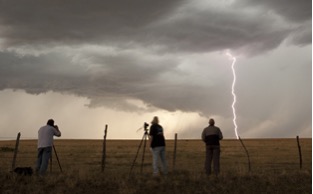
As we move closer to the storm, near a vast shelf of violently bubbling clouds with twisty wisps of white cloud looking like potential tornados, David calls over the radio: “Pull over, pull over. Now! Everyone out.”

Wondering if some disaster awaits us, I leap out with the others. Within seconds everyone has cameras out, capturing the vision before us.

It looks as though we have driven to Armageddon. It’s the meanest, moodiest sky I have ever seen – and it’s rushing towards us in a cauldron of broody blackness.

“Are we OK?” I ask. But David is too busy making calculations. “It’s definitely capable of spinning a tornado two or three miles from here. There’s a vigorous rising motion,” he says. And Danny, his camera glued to his face, declares: “God, I’m glad we got to this in time.”

Just as the storm is about to reach us, David demands: “Back in the vans!” And we speed away, before stopping near other chasers’ vehicles. The clouds, which David has by now determined are harmless, sweep over us. Clattering rain and hailstones the size of 1p coins pelt down.

We head south to Fargo to find a motel. “Awesome, man, absolutely awesome,” says Danny, shaking his head in disbelief at the intensity of the event.

It is an experience we repeat three more times over the next five days while travelling more than 3,000 miles. Disappointingly, we never in fact see a  tornado and twice we miss them only by minutes.

Yet I can’t help agreeing with the rest of the group that it is a fantastically exciting trip. Where else can you have such an adrenalin rush? And how else can you see such a wide expanse of America in such a short time? (Three days later we were in the Texas Panhandle.) It was indeed awesome and I couldn’t help but feel sorry for poor old Frank – stuck at home watching the Weather Channel in New Jersey.

Top of the hops in Brussels

Next to an evangelical religious centre and opposite a welfare office in a rundown suburb of Brussels near the Eurostar terminal, I am drinking a glass of wonderful – but rather strange – beer.

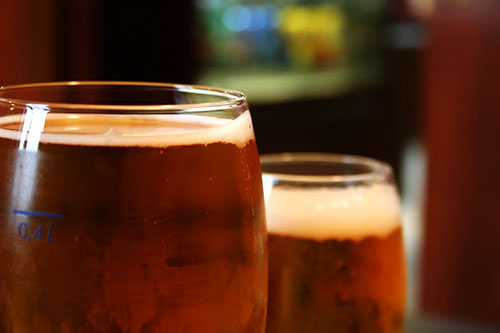
The taste is hard to describe: sour and bitter, yet tangy and seemingly grapey. There are no bubbles. The colour is chestnut. I take another gulp from the small, bulbous glass: Belgian beers tend to be strong, hence the glass size. This one is about 5.5 per cent; weaker than many others, which can be up to 13 per cent.

“Ahhh, so wine-like, it is very close to the aromas of a sherry,” says Jean Van Roy, whose great-grandfather Paul Cantillon founded the Cantillon Brewery here in 1900.

Since then it has produced lambic beers, which are made by a process known as spontaneous fermentation in which airborne, natural infections cause the beer to ferment – rather than additives such as yeast. This happens in a copper tub in the attic of the charmingly rickety brewery.

“This beer was recently included in a blindfold wine-tasting and many people didn’t even realise it was not a wine,” says Jean, as though this is a very good thing.

The brewery produces 170,000 bottles a year and Jean, who is wearing old jeans and battered boots, personally oversees production.

We are joined by Yvan de Baets, a 37-year-old who plans to open his own brewery in Brussels next year; currently Cantillon is the only one. Despite the rivalry, Jean and Yvan are close friends as they are both passionate about old brewing methods.

Yvan is critical of people’s taste for “sweet” mass-produced beers such as Stella Artois. And he has a theory about this. “It all goes back to the American GIs – they may have helped us to win the war, but they brought over Coca-Cola. We loved it and our taste buds changed. We began to like sweet things. Children now are so used to sweet tastes that they are not ready for bitter tastes when it comes to the age when they drink alcohol. But beer should be bitter.”

He describes strong mass-market beers as: “The yellow water that makes you crazy!”

With his jovial demeanour, Yvan makes a good drinking buddy when he takes me on a tour of some of his favourite bars in his local neighbourhood in the Commune of Saint-Gilles, in the south of Brussels. “Beer should not just be a quickly made beverage. It is part of the culture and history of this country,” he says after we settle at a small wooden table.

We are in Brasserie Verschueren, a cheerful Art Deco bar popular with artists. “They have little money, so that keeps the prices low,” Yvan says conspiratorially. We are sharing a 750ml bottle of blond malt beer called Moinette. It is 8.5 per cent, with a fantastically crisp taste, and costs 6.5 euros (£4.65).

On the far wall, there are colourful slats representing every team in the Belgium football leagues. In the days before television, locals would come here to watch scores come in over a beer. Yvan tells me about the plans for his brewery, Brasserie de la Senne (the Senne is the main river in Brussels). He is already producing the beer by sharing facilities at a brewery outside the city, but production will more than double when he gets his own premises next year.

We down our beers and move on. At our next stop, a lovely corner pub called Moeder Lambic near the commune’s grand town hall, we meet the young owner, Jean Hummler, 29, who pours us glasses of Taras Boulba, one of Yvan’s beers.

It is bitter, but bubbly and fresh – not too sour, not too strong (4.5 per cent). Jean serves up a plate of salamis, cured hams and goat’s cheese nibbles as I take a look around.

Inside there are long racks of classic Belgian cartoon books, many faded from old age, which are popular with students, basic wooden tables, a few regulars talking animatedly, and a sign above the bar that says “ EFFORT MINIMUM” in big red letters.

Jean is chatty. “We have more than 400 Belgian beers here,” he says. “I store more than 10,000 bottles. We have no Stella, no Leffe and no Hoegaarden. Like you have junk food, you have junk beer. We serve the good stuff.”

We try La Gueuze Cantillon, a slightly bubbly version of the spontaneously fermented Cantillon beer we tried at the brewery. It is excellent – combining the unusual sourness of lambic beer with a livelier aftertaste.

“Oh I am just crazy about Belgian beer!” exclaims Yvan, staring happily into his glass.

And as we set off into the city centre for the rest of our pub crawl, I can’t help but start to feel the same.

Need to know

Tom Chesshyre travelled with Visit Flanders (020-7307 7738, www.visitflanders.co.uk) and stayed at Hotel Orts (00 32 2 5170717, www.hotelorts.be), a small, trendy hotel with downstairs bar, close to the main drinking spots. Double rooms from about £143 with breakfast. Eurostar (www.eurostar.com) has return fares to Brussels from £59; journey time 1hr 51m.

Everything you need to know to take the train to Brussels: timesonline.co.uk/eurostar

Ten stops on the Brussels beer trail

Cantillon Brewery, 56 rue Gheude.
Open Mon-Fri 9am-5pm; Sat 10am-5pm; closed Sundays. Tours, at 4 euros (£2.85), are about half an hour. You can buy bottles of lambic, gueuze and raspberry-flavoured beer.

Brasserie Verschueren, 11-13 parvis de Saint-Gilles.
Art Deco haunt popular with arty types. Outside seating overlooks pretty church. Close to the Saint-Gilles m?tro station.

Chez Moeder Lambic, 68 rue de Savoie.
On a quiet corner, a ten-minute walk from Brasserie Verschueren; more than 400 beers on offer. The closest m?tro is Horta.

Le Greenwich, 7 rue des Chartreux.
A 19th-century interior: high ceilings, columns, old wooden panels and best known as a place to play chess. It is said Ren? Magritte once tried (and failed) to sell his surrealist paintings in return for a drink here.

Booze ’n’ Blues, 20 rue de Riches Claires.
Decorated with 1960s American paraphernalia, plus an old jukebox playing Otis Redding and the Contours.

Au Soleil, 86 rue du March? au Charbon.
In a lively neighbourhood south of the Grand Place with a 1970s-style lime green and yellow interior and chatty regulars. Good selection of strong beers.

Poechenellekelder, 5 rue du Chêne.
A few steps from the Manneken Pis (or “pissing boy”) fountain. Interior full of weird and wonderful puppets; an excellent beer selection as well as a decent menu. Good choice for lunch.

A la Mort Subite, 7 rue des Montagnes aux Herbes Potagères.
Close to the art galleries and the European Parliament, with a 19th-century interior and red-waistcoated waiters; a good place to try a gueuze beer.

La Brouette, on Grand Place.
A wonderful spot to take in the 17th-century Flemish Renaissance architecture of Brussels’ most famous sight. Sit outside or try a seat with a balcony view. La Chaloupe D’Or on Grand Place is also excellent.

Au Bon Vieux Temps, 12 rue de Marche aux Herbes.
A 17th-century hideaway. Stained-glass windows, brass chandeliers and lots of cosy corners. A few doors away, A L’Imaige Nostre Dame is another small pub with character.

First published in The Times, December 8 2007

Texas: in the footsteps of Annie Proulx

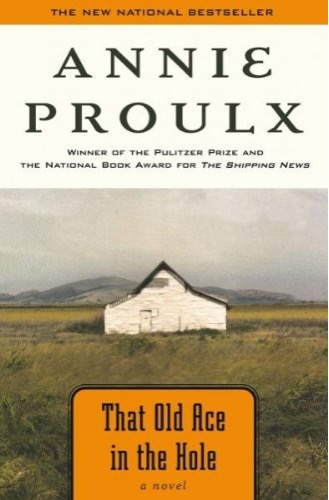
Annie Proulx

SOMETHING’S up. “Whoa back there,” hollers Byron, our guide, waving an arm in warning. “We got us a rattler. Throw me dat ‘der pistol won’t ya, Taylor.”

We draw to a halt. Taylor pulls out a Colt .22. “Where’s he gone . . . ‘der he is!” A dulled firecracker sound plays out across the plains — followed by another.

Byron holds up the dead snake, and hands me the rattle pod pulled from the tail. “Here’s a souvenir from the real Texas, buddy!” There are plenty of places in the States to experience “Frontiersville” USA. Former car park attendants at Florida theme parks dress up in chaps to deliver the Wild West, tourist-style — no cow dung thrown in.

Towns across California play up the lawless Gold Rush days — clapboard houses reconstructed and aged for authenticity. “Dude ranches” throughout the Midwest offer a processed taste of cattle life.

Having visited the States many times before, I wanted to get away from all that: to experience old-style ranch America that’s not-for-the-tourists-at-all. But how? The Pulitzer prize-winning author Annie Proulx provided the inspiration.

Her novel That Old Ace in the Hole decribes life in the Texas Panhandle, part of the far north of the state shaped as though you could grab hold of it. Its theme is how modern ways of living are beginning to threaten ranchers’ existence. Despite this, she makes clear, the region remains at the heart of true cowboy-land, almost forgotten by the rest of microwave-meal USA.

And it’s full of characters, as Proulx, who spent months researching the book, finds. “This was the original cowboy country and it still is the most cow of anywhere,” says one, early in the novel. “So people here are pretty rugged. This country was made for cows, once they got rid ‘a the buffaloes. To live here it sure helps if you are half-cow and half- mesquite and all crazy.”

I soon found them too, although a holiday in the Panhandle is by no means a traditional package trip. Tourists can be as much of a novelty to locals as locals are to tourists — which gets people talking.

We’re on Mill Iron Ranch, 30,000 acres near Wellington. It’s run by Don Allred, a man who wears a Stetson to keep the sun off his face and spurs to speed up his “hoss”, not to look the part for visitors. He has begun taking horseback tours as a way of “maybe makin’ a few bucks”.

He tells me about ranch life: “I’m big on tradition. We rope ‘n’ drag instead a runnin’ cattle through chutes. I wanna pass the old ways on to my children, ‘ya see.”

After the ride, we stop at the Wellington livestock auction. A semi-circle of stands overlooks a pit surrounded by a metal fence on which guys rest their boots, watching animals being herded in.

A sign says: “Not responsible for accidents, man or beast”. There are enough characters about to fill two or three Proulx chapters.

The auctioneer, wearing a baseball cap, a large polystyrene cup of coffee by his side, begins a sale. It’s almost incomprehensible and its tone sounds strangely (very strangely for these parts) like a mosque chant: “Dollar! Giggerdy, giggerdy, giggerdy, Jack 25! Jack 25! Give me higher. Giverme, giverme, giverme. Two times!” I stay at a succession of small towns, the accommodation set up by the Panhandle Tourism Marketing Council, which is keen to put people in touch with individual B&B owners (who treat you like long-lost friends).

After flying to Amarillo, in the southern tip of the Panhandle, Spearman (population 3,071) is my first stop, where the Bishop Cottage, a picturesque clapboard house surrounded by geraniums, is run by Gina Gillispie.

She shows me around town: it doesn’t take long, in her red pick-up. The tiny main street, low level red brick buildings with a mixture of 1920s and 1960s styles and an inviting artist-owned restaurant, looks untouched by modern America.

“It hasn’t been,” says Gina. “I’ve lived here 40 years and nothing has changed — not much, except some things ‘a shut down.”

As we drive by fantastically open landscape, she tells me about the “good ‘ole” days of oil and gas discovery in the 1960s and 1970s, peaking in the 1980s, followed by harder times. “A lotta ranchers went from makin’ $500,000 a year and driving a Rolls-Royce to makin’ $40,000 and driving a Chevy.”

Bumper stickers and church placards we pass bear witness to the region’s diehard conservatism: “Prayer is a hotline to Heaven”; “National gun week: let’s get loaded”; “Don’t mess with Texas”; “Exercise daily: walk with God”. This is Dubya Bush territory, for sure.

But there isn’t an aggressive, Deliverance-style Deep South attitude. “Folks” are friendly, no more so than in Lipscomb (pop: 38) where I stay a night in another clapboard house, with a tin bath and kerosene lamps — £25 a night and incredibly peaceful.

Proulx spent a lot of time in Lipscomb, which has an enormous courthouse, a saloon, a saddlemaker’s shop — and not a whole lot else.

Doug Ricketts, a local cabinet-maker, became friends with Proulx. “Let me tell you, she could observe more in one day than most folks could in a month,” he says. “She’s quite something.”

He takes me to the Donut Shop in Higgins, a couple of miles away, another Proulx haunt. It’s a ramshackle joint with a rusting tin ceiling, darkened side booths and jokey signs such as: “God tell Mamma: Real cowboys don’t take baths”.

Gene Purcell, who retired as a cowboy “years back”, serves up beef brisket, pea salad, beans and cabbage. “I’m a helluva good cook, ain’t I,” he says, as I tuck in.

Like almost all the people I meet in the Panhandle, Gene soon opens up about the rancher way of life. I ask if he’s ever had a British tourist before.

He laughs. “One guy, he came up off the I-40. He was from the North of England,” he says. “He ate two whole bowls ‘a beans. We’d never saw anyone do that before!” As Proulx points out, isolation means that stories last longer in the Panhandle — they are the much enjoyed local currency. For those who want to hear a few (because people will tell you them), to find out something about what remains of “Wild West USA” (without a Hollywood tint) and to revel in one of the least known, least populated and most beautiful landscapes in the States . . . it is, as snake-shooter Byron would say, a helluva good place to start.

Need to know

Getting there: Tom Chesshyre travelled with United Airlines (0845 8444777, www.unitedairlines.co.uk), which has flights to Amarillo from £415. Travelbag (0870 8901459, www.travelbag.co.uk) has flights to Amarillo from £328.

Getting around: Alamo (0870 5994000, www.alamo.co.uk) has a week’s fully inclusive car hire from about £175.

Where to stay: In Spearman, the Bishop Cottage is £50 a night; Charlie’s Place in Lipscomb is £25. Outside the town of Canadian, which has a good B&B choice, is the wonderfully isolated Arrington Ranch, with great rooms for £32. Call the Texas Prairie Rivers Association (001 806 323 5397, www.texasprairierivers.com). In Amarillo, the Ambassador (806 358 6161, www.ambassadoramarillo.com) has doubles from £50.

Ranch rides: Mill Iron Ranch (806 447 2727), rides £40pp for half a day.

Texas information: UK tourist office (020-7978 5233, www.TravelTex.com).

Reading: That Old Ace in the Hole by Annie Proulx (Fourth Estate, £6.99).